knowledge library / Choosing a Rug for a Contemporary London Flat
For a contemporary London flat, choose the rug in relation to the whole visible room: the seating, exposed floor and any dining or working area beside it. Decide whether colour, pattern or texture should lead, then compare the rug against the materials already in place. At WOVEN PLACE, a named design or texture gives that comparison a useful starting point.
A flat with one main living space can bring several finishes into the same view. Kitchen cabinetry, curtains and a dining table may all sit beyond the sofa. The rug needs to work within that view, even when it belongs to the seating area alone.
Give the rug a clear role in the open-plan room
A rug can mark the seating area without repeating every boundary in the floor plan. Begin with the sofa and chairs, then look across to the adjoining space. If there is already a strong change in flooring or a row of kitchen units defining the room, consider whether the rug needs another assertive shape or a quieter field.
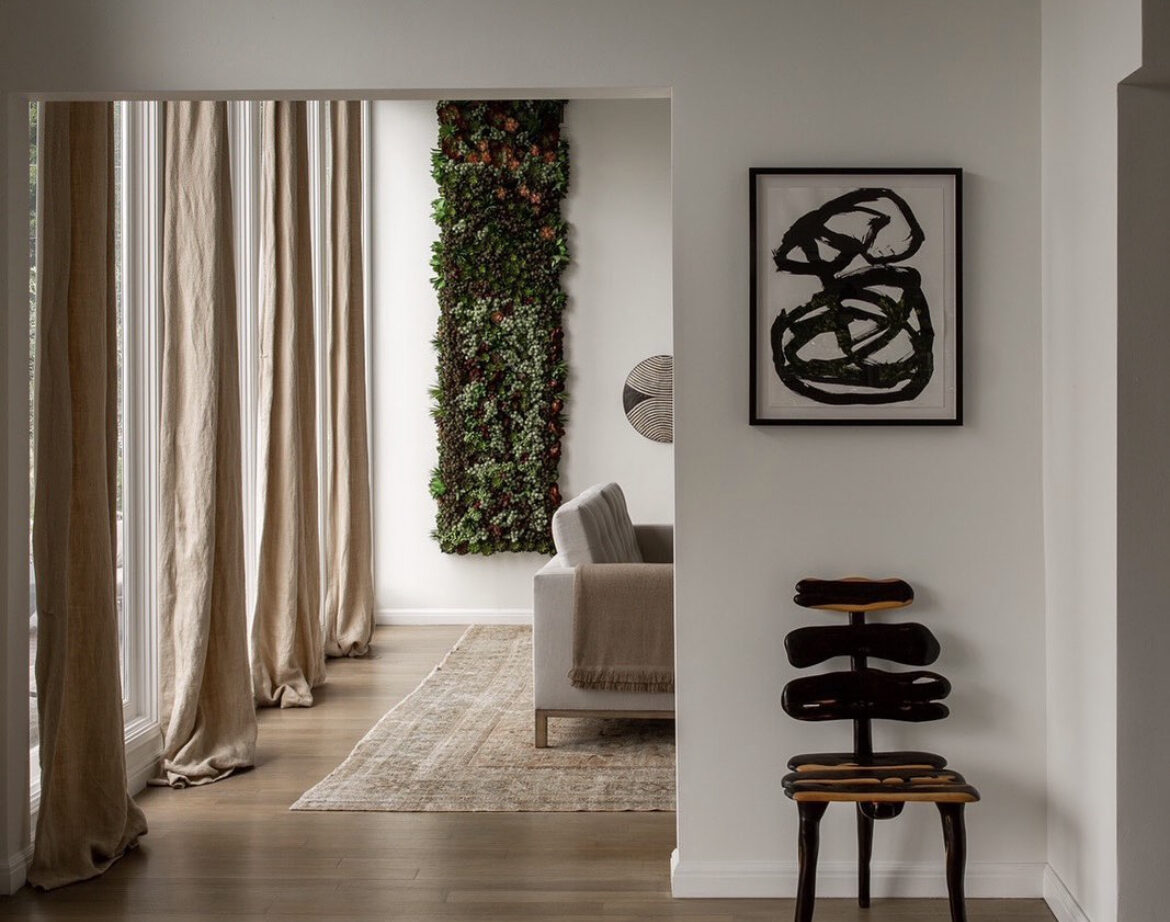
Imagine a sitting area beside a dining table, with the same timber floor running beneath both. A rug beneath the seating can establish one zone while the exposed floor connects it to the dining area. Before adding a second rug, look at the gap between the two proposed outlines and the route used to move around the table.
Our UK sitting-room sizing guide covers dimensions and furniture placement. Resolve that footprint first, then use the chosen outline when comparing the design.
Carry one colour relationship across the view
A rug palette is easier to judge beside the room's actual materials. Put the sofa fabric and flooring reference alongside the sample, then add the finish that occupies the next largest area of the view. In an open-plan flat, that may be a kitchen cabinet rather than another piece of upholstery.
You do not need an exact colour match between every surface. A grey-brown rug might relate to the floor while a smaller accent in the room picks up its warmer tones. Judge the relationship as a whole, then decide which part needs adjusting.
WOVEN's colour-selection process uses physical references in lighting close to the intended setting. Review the proposed rug in daylight and under the lighting used in the evening where possible. A photograph is useful for remembering the arrangement, but keep the sample identified for the colour decision.
Choose between a patterned field and a textured surface
A contemporary interior can accommodate a strong rug pattern or a restrained surface. The useful distinction is how much visual activity the room already contains. A large piece of art, open shelving or strongly figured stone may leave less room for another focal pattern than plain walls and simple upholstery.
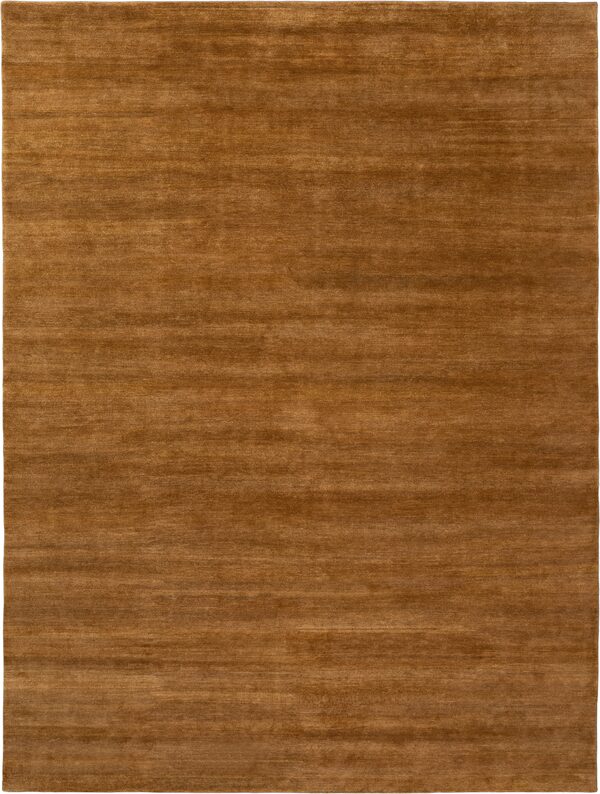
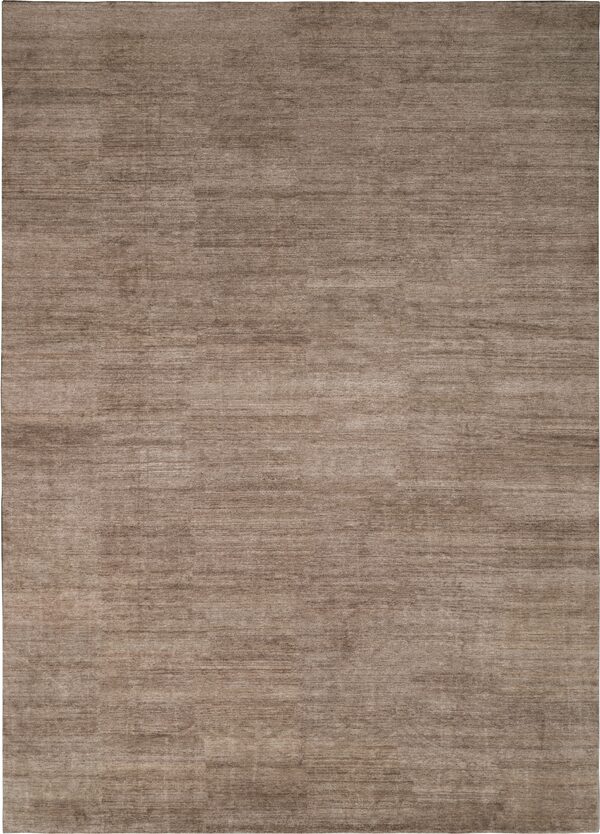
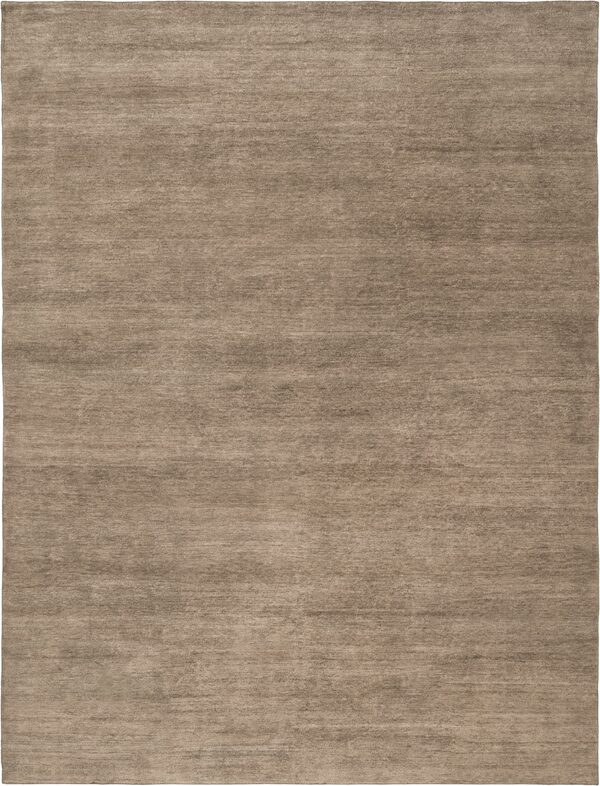
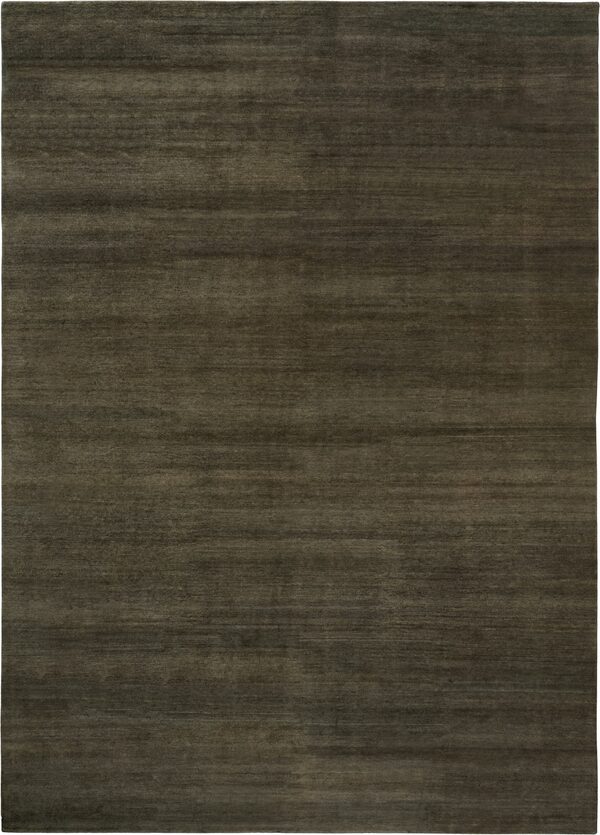
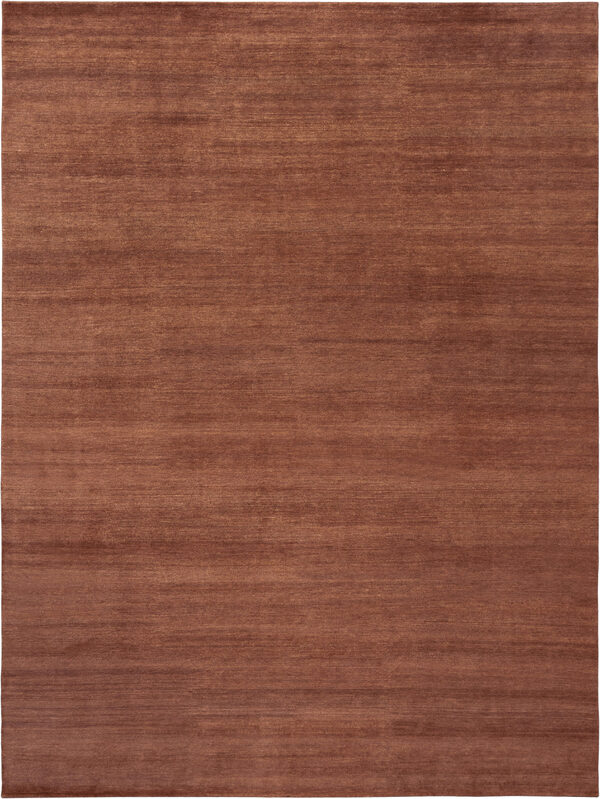
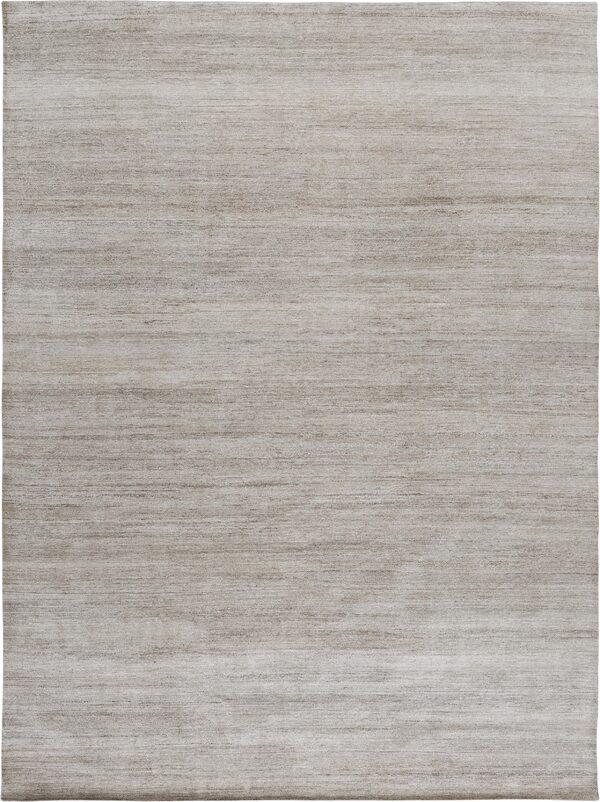
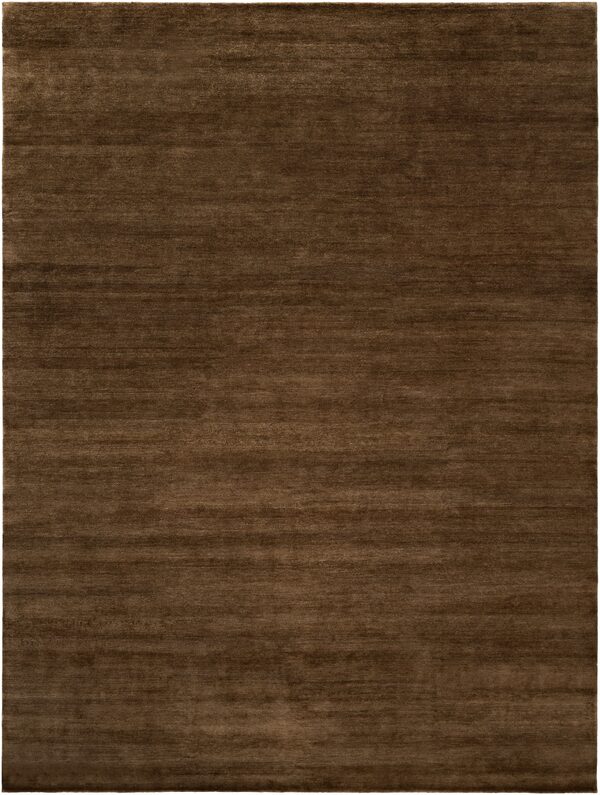
Wool Strata offers one textured direction. Its 100% wool, hand-knotted surface has a low sheared pile of approximately 8 mm and subtle changes in tone. It gives you a specific quality to assess alongside the room's finishes, without needing a large motif to create variation.
For a more graphic direction, Shodo draws on brushstroke painting. Consider where the larger gestures would remain visible around the furniture. A coffee table can cover the centre of a design, so use the full rug image on the plan as well as a close-up sample.
The wider Textures collection provides other surfaces to compare. Keep the exact quality and colourway with each reference; a general description such as “neutral wool” leaves too much of the finished appearance unresolved.
Check the surface where the room changes use
The edge of a sitting-area rug may meet a route to the kitchen, a dining chair or the chair used at a desk. Describe those conditions when selecting the quality. A rug chosen for the sofa area still needs to be considered where furniture moves across its edge.
Check door clearance with the proposed rug and underlay together. Keep the care instructions with the sample so the appearance you prefer is considered alongside the cleaning routine. A low profile or a natural fibre does not, by itself, establish suitability for rolling chairs or underfloor heating.
These practical checks are easier to settle while the shortlist is small. If one option creates a difficult edge position, revisit the outline or placement before committing to its colour.
Bring the whole room to the comparison
Send a photograph from the main entrance to the living space, a measured plan and the materials you intend to keep through our London contact page. Include the rug references you want to discuss so current viewing options can be checked.
Our London sample guide explains how to prepare for that visit. Use the full design to judge composition and the identified physical reference to judge colour and surface.
Published by WOVEN. For questions about this guide or to flag a correction, use the WOVEN PLACE contact page above.