knowledge library / Why We Still Weave Rugs by Hand
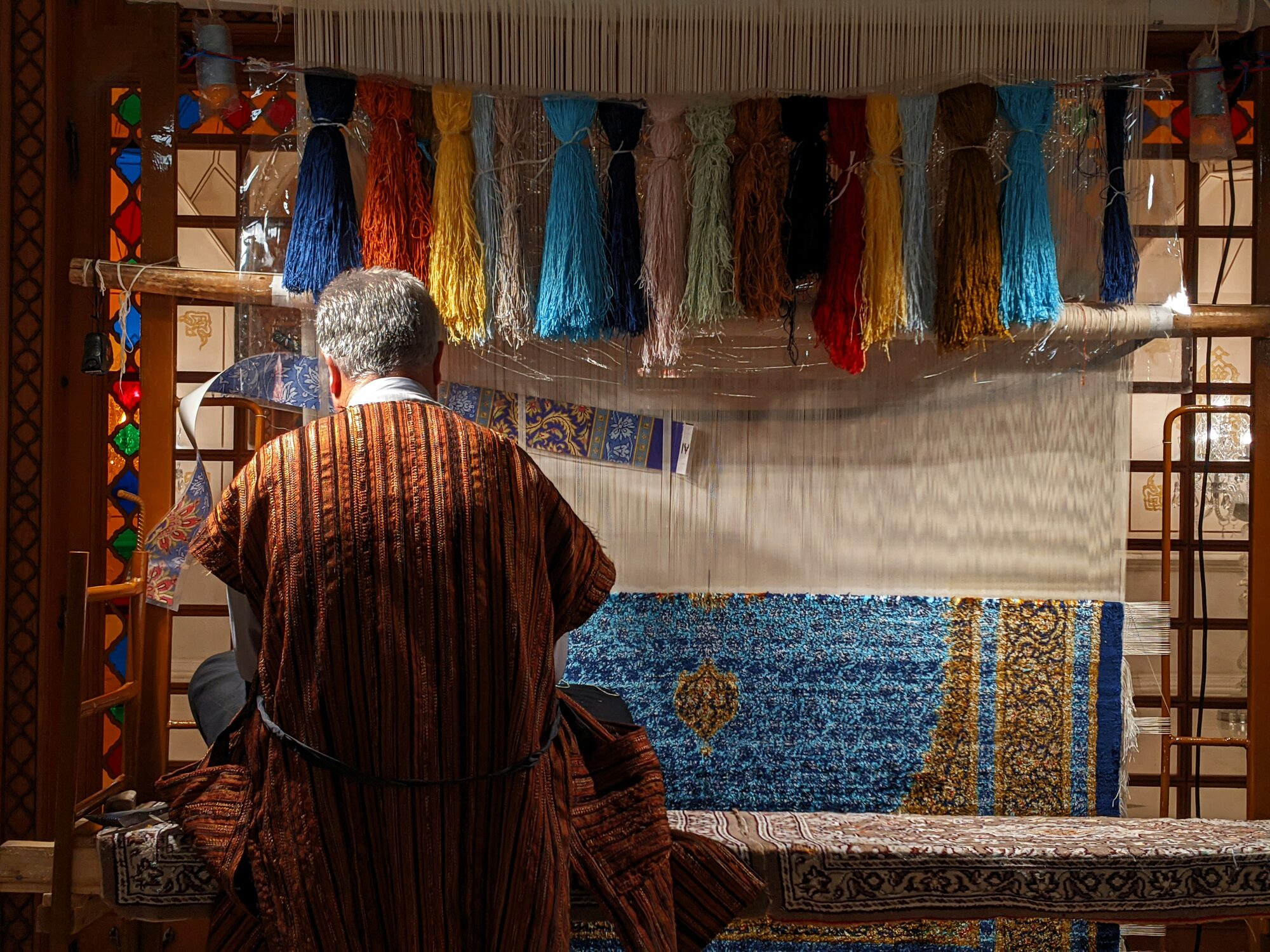
Rugs are still woven by hand because the method allows fiber, structure, pile, color, and finish to be developed as one surface. WOVEN continues to use hand weaving because it keeps design decisions close to material behavior, construction, and finishing. A loom is not simply a slower route to a predetermined image: it lets visual and tactile intentions be resolved through the structure itself. That responsiveness is the method’s enduring value, but it does not make every handmade rug superior.
Hand weaving is a method, not a guarantee
A handwoven rug is built on a loom through work performed and guided by people, but the phrase covers more than one construction. A pile rug may be formed by tying yarn around warp threads and securing the rows with wefts. A flatweave builds its surface primarily through interlaced warp and weft. Wrapped-weft constructions create another kind of low, articulated surface. The meaningful question is not simply whether a hand touched the rug, but what the chosen structure is doing.
The term also needs a boundary. Handmade does not, by itself, prove that a rug is well designed, well executed, durable, ethically produced, environmentally responsible, made from natural fibers, or suitable for a particular room. Those are separate judgments. Hand production creates a field of possibilities; the quality of the result depends on materials, construction, execution, finishing, use, and the conditions under which the rug was made.
Why hand weaving remains a contemporary design tool
Hand weaving remains relevant because a rug is not merely an image applied to the floor. It is a structure with height, density, direction, resistance, softness, sheen, and edge. Those qualities alter how color appears, how light moves across the surface, and how the rug holds its place in a room. Working by hand lets design decisions be resolved through the structure itself rather than treated as decoration added afterward.
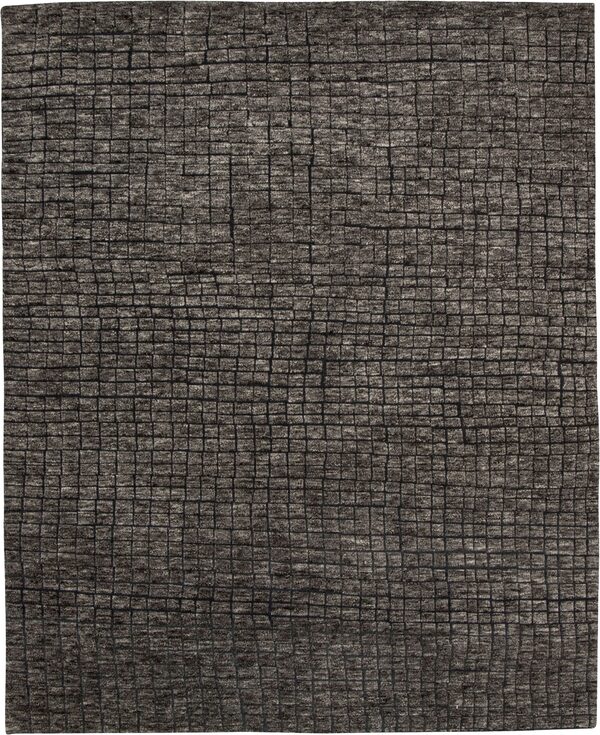
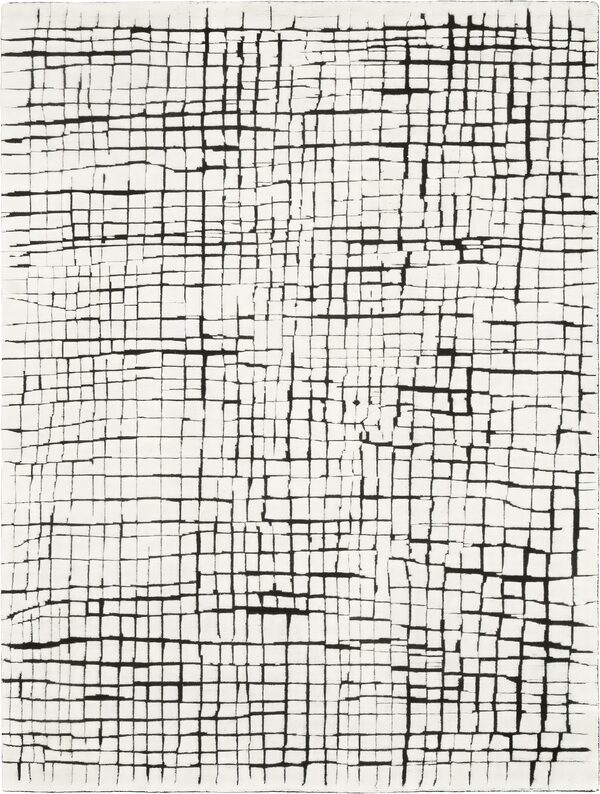
WOVEN’s weave-first approach begins by treating material and construction as one design problem. Across STUDIO WOVEN textures, the design process considers material sourcing, knot count, pile height, washing, and finishing together, then asks whether texture and color resolve as a coherent surface. The sequence is iterative because changing one variable can alter several others.
How do hand-knotted, flatwoven, and soumak rugs differ?
Different handwoven structures give a designer different ways to organize surface, light, and touch. The table describes design tendencies, not universal performance rules; actual results depend on the fiber, density, finishing, scale, and quality of execution.
| Construction | How it is built | Primary design opportunity | Important qualification |
|---|---|---|---|
| Hand-knotted pile | Pile yarn is knotted around warp threads and stabilized by weft passes. | Depth, relief, softness, and carved or sheared effects. | Knotting alone does not establish quality or longevity. |
| Flatweave | Warp and weft interlace without conventional cut pile. | Graphic clarity, low profile, and visible structural rhythm. | Low profile does not mean simple or appropriate for every placement. |
| Soumak or wrapped-weft | Weft yarn wraps around warp threads. | Raised, articulated, braided-looking texture. | Terminology and execution vary, so the construction of an individual rug should be confirmed. |
The Met’s sumak, pile, and flat-woven technique guide explains the distinction among extra-weft wrapping, knotted pile, and flat-woven tapestry; The Met’s examination of the Emperor’s Carpet shows wool knots arranged with silk warps and weft passes. These references support the construction descriptions, not universal quality or performance claims.
WOVEN’s categories show how these structural families are interpreted in current work, including modern flatwoven rugs, wool soumak textures, and wool tulu rugs that combine flatweave and pile. These internal examples demonstrate WOVEN’s design vocabulary; they do not replace independent technical evidence.
The material and the weave must be designed together
A fiber does not express itself independently of construction. The same general material family can read quiet or reflective, compact or open, tailored or irregular, depending on yarn preparation, density, pile, shearing, washing, and finishing. The Australian Wool Education Trust defines carpet texture through high-low or cut-loop patterning, yarn twist, and pile orientation, and identifies tip shearing as a finishing process that creates cut-and-uncut texture. Its technical wool-carpet glossary supports these definitions.
Pile height and orientation affect the surface a viewer perceives. High-low pile creates relief, while pile orientation contributes to the surface’s visual and tactile character. Direction also matters: the Carpet and Rug Institute notes that a change in pile direction can make the same area appear darker from one viewpoint and lighter from another. The institute’s carpet appearance bulletin documents this effect. These are tendencies of pile surfaces, not proof that one height or orientation is best for every rug.
Washing and finishing require equally careful qualification because their effects depend on the actual fibers, dyes, weave, and process. Museum of Western Australia conservation guidance notes that wet cleaning can permanently alter a textile’s look and feel and can remove finishing agents. The museum’s textile-treatment guidance supports this caution. A production wash may be intentionally specified, but its result cannot be predicted responsibly without details about the individual rug and method.
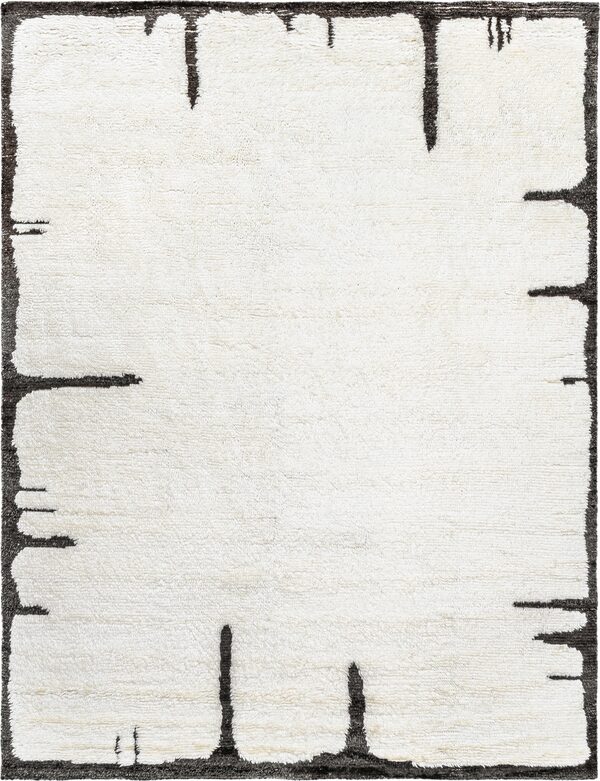
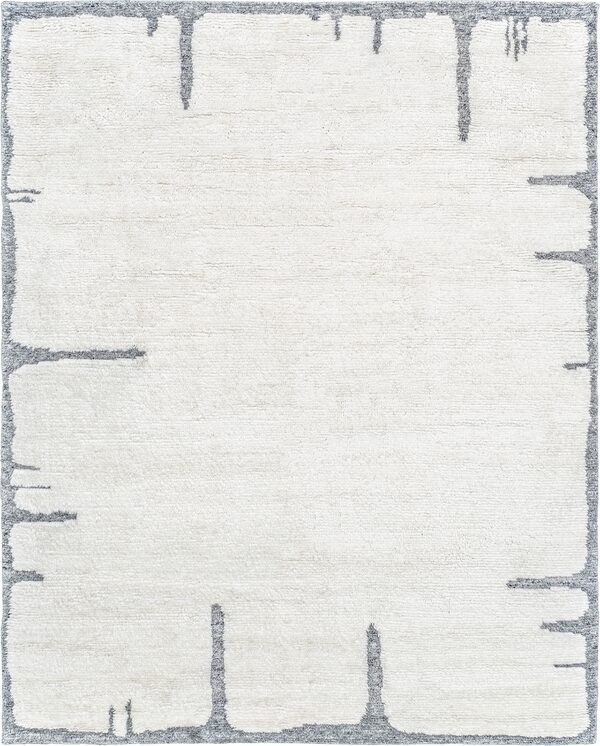
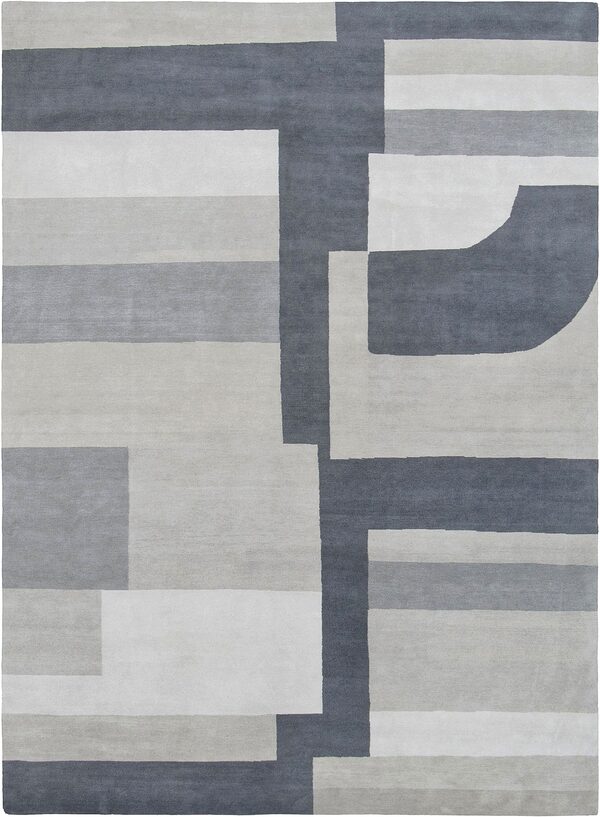
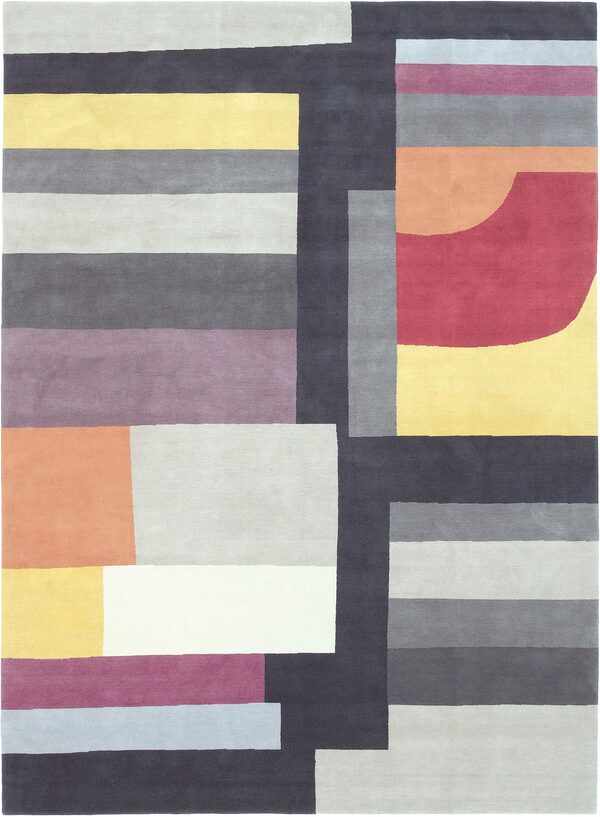
For Woven, that interdependence is the point. The STUDIO WOVEN collection explores how material, texture, and color can be recomposed for present interiors. The aim is not to imitate age. It is to study rugs in which construction and visual character are inseparable, then ask what that relationship can become now. WOVEN’s sheared merino hand-knotted textures provide a current pile-construction reference, while the technical claims above remain independently sourced.
Variation is evidence to read, not a virtue to assume
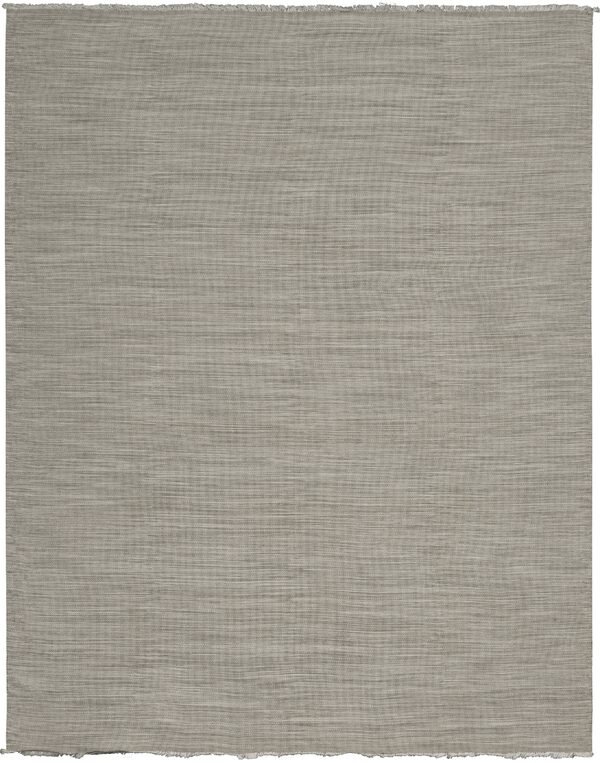
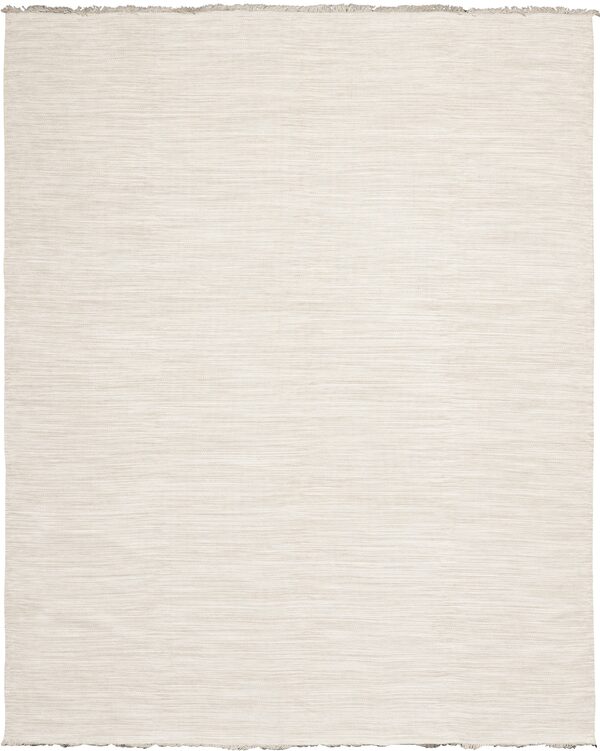
Variation in a handwoven rug can record changes in yarn, tension, dye uptake, pile direction, finishing, or the decisions made during production. It may give a field of color movement and keep a large surface from feeling inert. It can also be neutral, distracting, or evidence of poor execution. Calling every irregularity “character” avoids the real design question: does the variation strengthen the rug’s intended rhythm, color, and structure?
A useful assessment distinguishes responsive variation from inconsistency. Responsive variation feels related to the material and repeats with enough coherence to belong to the surface. Inconsistency interrupts the construction, weakens an edge, distorts the design, or creates a problem that the rug was not intended to have. The difference requires looking at the whole rug and then returning to the detail.
Where does human judgment enter the hand-weaving process?
The value of hand production lies less in a single gesture than in a chain of judgments. Material selection sets a range of possible textures. Structure determines how yarn occupies the plane. Knot count or interlacing density affects scale and definition. Pile and shearing change relief. Washing and finishing can alter the final hand and visual movement. At each point, the maker or designer must decide whether the emerging surface serves the original intent. The technical relationships are documented in The Met’s analysis of weave density and motif definition, the Australian Wool Education Trust carpet glossary, and Museum of Western Australia guidance on washing and textile finishes.
Human judgment does not mean every handwoven rug is improvised. Some traditions follow a prepared design; others leave more decisions to the loom. UNESCO’s documentation makes the difference concrete: carpet weaving in Kashan is described as beginning with a design drawn from established styles, while the documented Fars tradition includes weaving without a cartoon, with design and color decisions held by the weavers. These are specific traditions, not a universal division between workshop and nomadic rugs. UNESCO separately documents the traditional carpet-weaving skills of Kashan and the traditional carpet-weaving skills of Fars.
How does hand weaving preserve living design knowledge?
Rug weaving is not one timeless, universal craft. It is a group of living practices shaped by particular communities, workshops, materials, tools, markets, and periods. UNESCO’s records for Fars and Kashan both describe knowledge transmitted through teaching and apprenticeship, but they document different design processes, divisions of work, and technical practices. Cultural respect begins with naming those differences rather than turning every handwoven rug into the same romantic story.
That specificity matters to contemporary design. A technique is never only a look; it contains accumulated knowledge about sequence, tension, material behavior, and finishing. Working with hand weaving today should keep that knowledge visible, credit people and places accurately, and avoid implying that tradition stands still while design moves forward.
How to evaluate what hand weaving contributes to a rug
Evaluate a handwoven rug by connecting what you see and feel to the surface it is trying to create. The following sequence keeps the handmade label from substituting for judgment.
- Begin with the intended effect.
Should the rug feel graphic, quiet, deep, tailored, irregular, luminous, or grounding? A construction is successful when it serves a clear visual and tactile purpose.
- Read the structure.
Look at the front, edge, and reverse when access allows. Identify whether the design is carried by pile, interlacing, wrapping, or a combination. The Met’s textile-conservation presentation shows how front and reverse views reveal knots, warps, weft rows, and construction details that are less visible on the face.
- Connect material to construction.
Ask what the yarn and the weave are doing together. Sheen, softness, crispness, and color movement come from a system, not a fiber name alone.
- Judge variation in context.
Step back before focusing on an irregularity. Decide whether it supports the whole composition, reflects the material, or interrupts the intended structure.
- Separate craft from adjacent claims.
Request specific evidence for origin, fiber content, production standards, care, condition, and suitability. Hand weaving does not verify those facts on its own.
Why Woven still chooses the handwoven path
Woven still chooses hand weaving because the method lets a rug’s visual language emerge through construction. Across modern flatweaves, pile surfaces, and texture-led pieces, the weave can carry the idea rather than merely support it.
WOVEN’s point of view is also grounded in documented experience. Its founder, Abraham Moradzadeh, has collected antique rugs since 1965, and Woven describes more than 50 years of work with antique and vintage rugs. WOVEN’s history and Abraham Moradzadeh’s role are documented on its About page. Readers can also examine WOVEN’s distinct antique rug collection and vintage rug collection as separate records of historical design, construction, and use.
What does hand weaving change?
Hand weaving changes how a rug’s idea becomes physical: structure can create relief or restraint, pile can redirect light, and finishing can refine or alter the surface. Woven values the method because it makes those decisions interdependent and visible in the finished object. That does not certify quality, durability, sustainability, ethical production, or suitability. It gives designers and makers a responsive construction process, and it gives the reader a more exact way to judge whether material, technique, variation, and intent truly belong together.