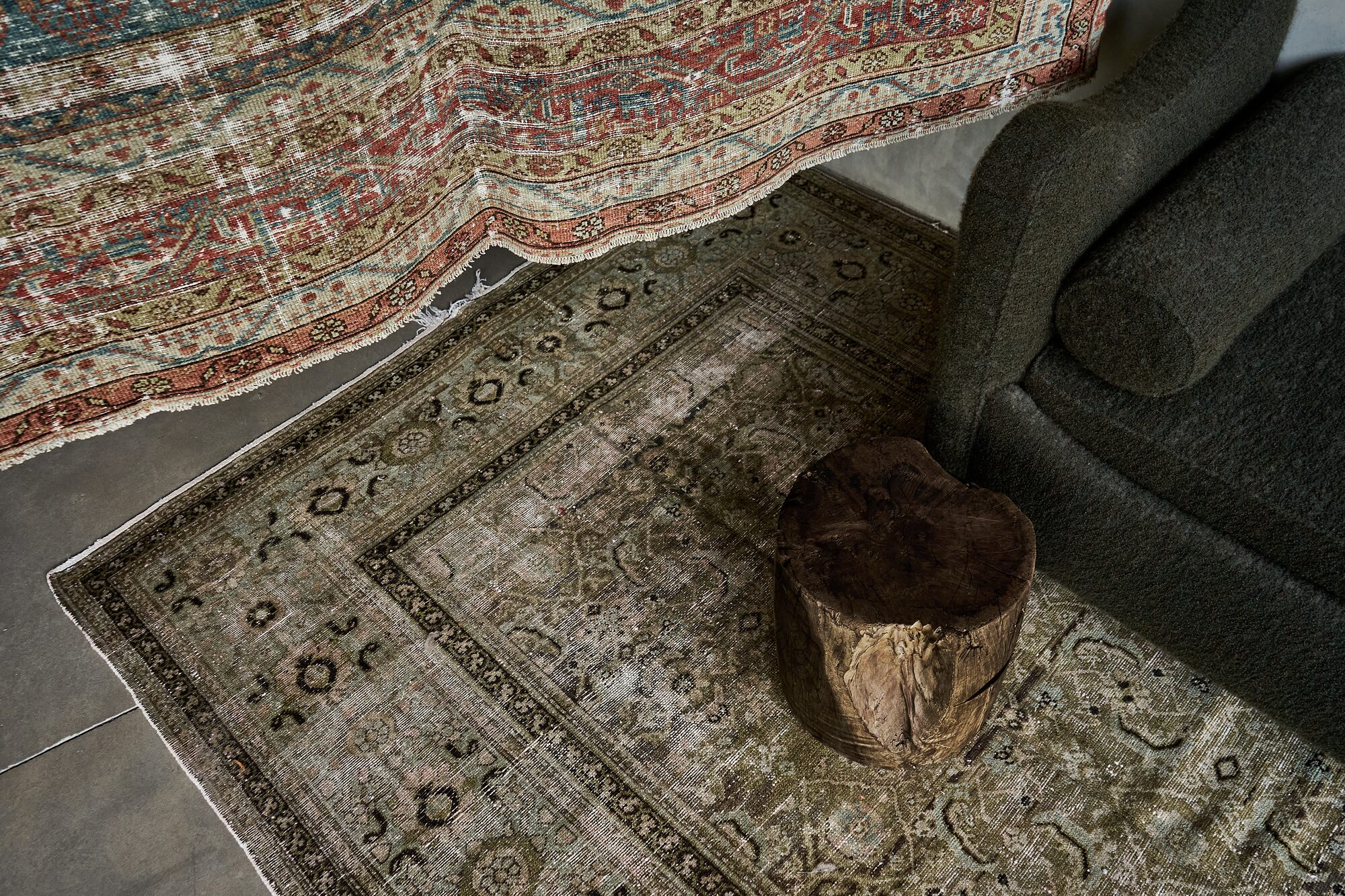
knowledge library / What Is Antique Distressing in Rugs?
Antique distressing describes an aged appearance, not a reliable date or a single rug-making technique. A softened surface may result from wear, fading, deliberate finishing or an antique-inspired design woven into a new rug. Before buying, distinguish the rug’s age and origin from its present condition and any treatment that changed its color, pile or proportions.
A new rug can look timeworn, and an old rug can retain strong color and substantial pile. Neither a faded palette nor a distressed collection name proves that a rug is antique. Ask for the object’s description and treatment history separately from the visual effect.
How can a rug acquire a distressed appearance?
A distressed appearance can arise through use, exposure or intentional alteration. Original woven color variation is a different phenomenon again. Separating these causes matters because similar-looking surfaces can have very different structural condition and histories.
| Feature or process | What it describes | What it does not establish |
|---|---|---|
| Wear | Loss or change associated with use, including reduced pile | A precise age, sound foundation or suitability for more traffic |
| Fading | A change in color through exposure | Original palette, antique status or a beneficial treatment |
| Abrash | Color variation associated with the yarns and weaving | Age, authenticity or evidence that the rug has been distressed |
| Deliberate alteration | Work such as recoloring, overdyeing or pile reduction | Conservation treatment or preservation of original material |
| Antique-inspired new design | A newly made rug using an aged visual language | An antique date or historic provenance |
The guide to abrash explains why color movement should not be used as a shortcut to dating. A band of different-colored yarn can belong to the original weaving; a patch of changed color may have another cause. Inspection is needed when that distinction affects attribution or purchase.
Is distressing the same as restoration?
Distressing and restoration have different purposes. Distressing seeks a visual effect. Conservation or restoration addresses an object’s condition and an agreed treatment goal. Washing, clipping, recoloring or cutting should not be described as automatically preserving an antique rug merely because the result looks softer or more uniform.
Removing pile or changing color can alter material evidence. A treatment proposal should explain what will change, what will remain, what alternatives exist and what cannot be undone. Significant, fragile or uncertain rugs warrant assessment by an appropriately experienced textile conservator before invasive work. The antique rug restoration guide sets out the questions to take to that review.
How do WOVEN’s distressed collections fit this distinction?
WOVEN’s Distressed Wool is a contemporary collection, so its name should be read as a surface and design description rather than an age attribution. WOVEN also presents over-dyed distressed rugs as a separate browsing category. For an individual piece, confirm its original age, construction, present condition and disclosed alterations.
These choices can serve different interiors without one being inherently more authentic as a design choice. A new, intentionally softened texture may suit a room that needs a controlled palette and size. An older rug may be chosen for its particular surviving composition and history. Neither choice removes the need to assess material, care and room use.
Does distressing lower a rug’s value?
Distressing has no universal effect on value. On a contemporary rug it may be part of the intended design. On a historic rug, loss of original material, altered color or undocumented treatment may change how the object is understood. Market value requires a separate appraisal of the particular rug and relevant market.
Do not assume that wear adds value because it looks atmospheric, or that every repair diminishes value. Ask a condition specialist about the physical implications and a qualified appraiser about the relevant value question when those stakes matter. A decorative preference is not an appraisal method.
How should you evaluate a distressed rug?
Evaluate a distressed rug through three separate records: identification, condition and treatment. Keeping those records distinct prevents an appealing surface from standing in for evidence about age or stability.
- Confirm the identification. Request the stated origin, approximate date, construction and basis for any attribution. Keep uncertainty visible.
- Inspect the complete object. Request front, reverse, edge and end photographs, including the lowest-pile and repaired areas.
- Ask about alterations. Record known washing, overdyeing, recoloring, pile reduction, resizing, backing and repairs. An unknown history should remain unknown.
- Check structural suitability. Have weakness, exposed foundation or active loss assessed before specifying traffic and furniture loads.
- Agree on care. Obtain guidance appropriate to the actual fibers, dyes, condition and past treatment.
- Compare the visual role. View the rug in the intended light and layout after the factual questions are resolved.
Establish condition before deciding whether repair or alteration is appropriate. An initial idea for a cutdown or a softer finish should be tested against what would be removed and whether the rug can support the proposed treatment. A room requirement does not make every alteration suitable for an antique.
How does a distressed surface work in a modern interior?
A distressed surface can soften the relationship between a rug and crisp architecture by reducing visual contrast or introducing variation. Treat that as a design judgment about the actual piece. A strongly patterned worn rug can still be visually active; a new rug can be quiet without imitating age.
Compare the perimeter visible around furniture, the strongest surviving motifs and the balance between the rug and nearby wood, stone or upholstery. Then check that the most worn areas are appropriate for the proposed use. The distinction between patina and damage is more useful than assuming every sign of wear is desirable.
Antique distressing is best understood as a description of appearance that needs explanation. Buy with a clear account of what the rug is, what has happened to it and what it can support now. The room can benefit from an aged surface without confusing that surface with proof of age.