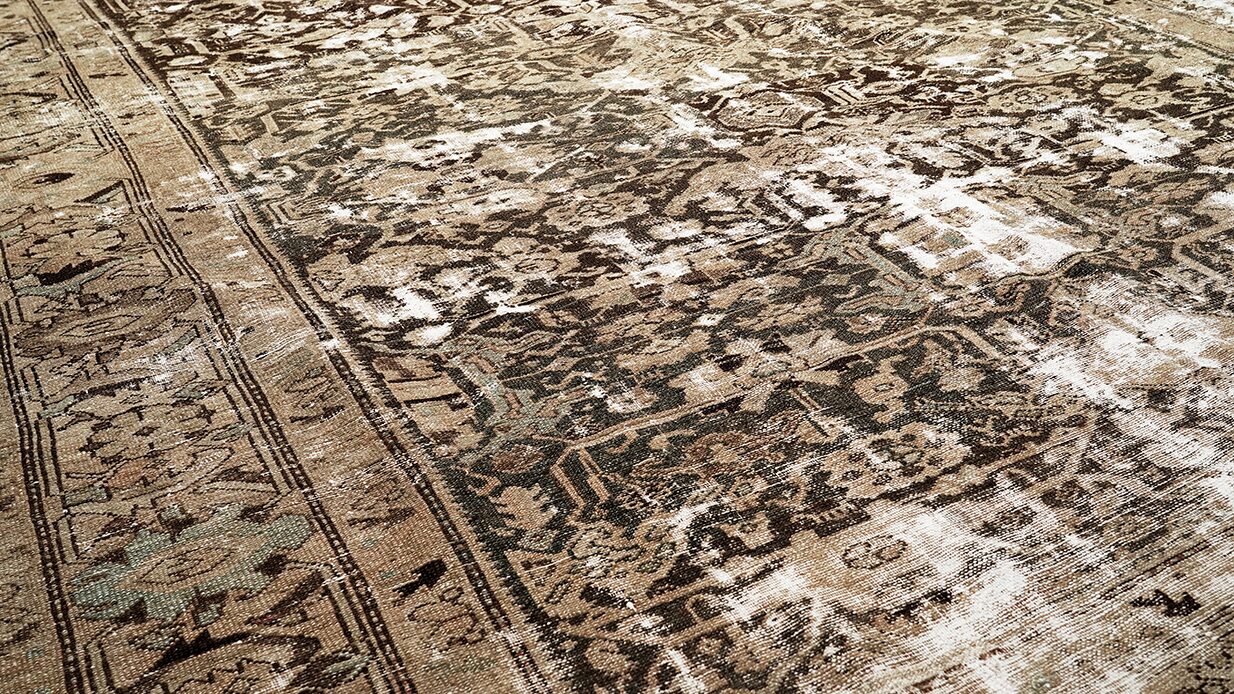
knowledge library / What Is Abrash? Understanding Color Variation in Handmade Rugs
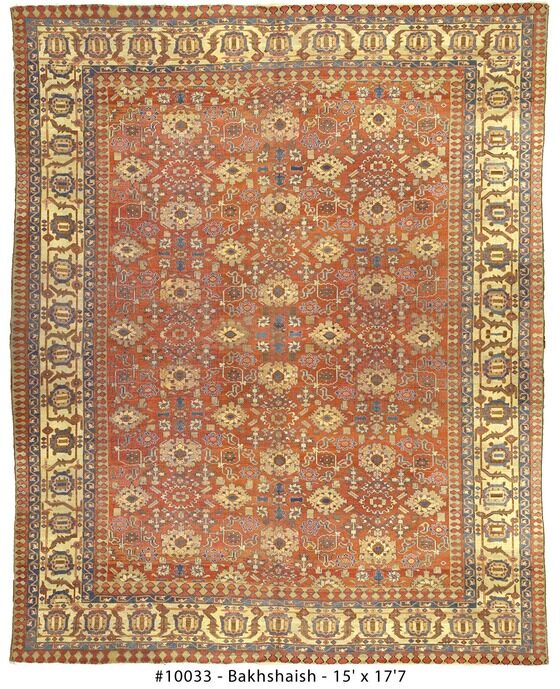
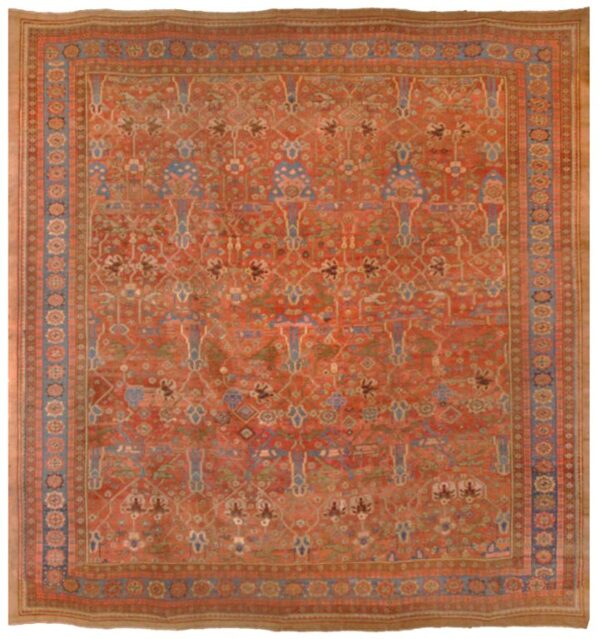
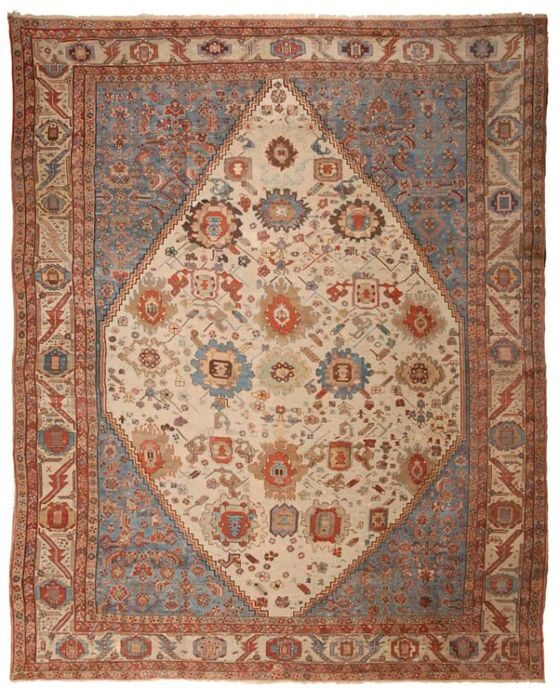
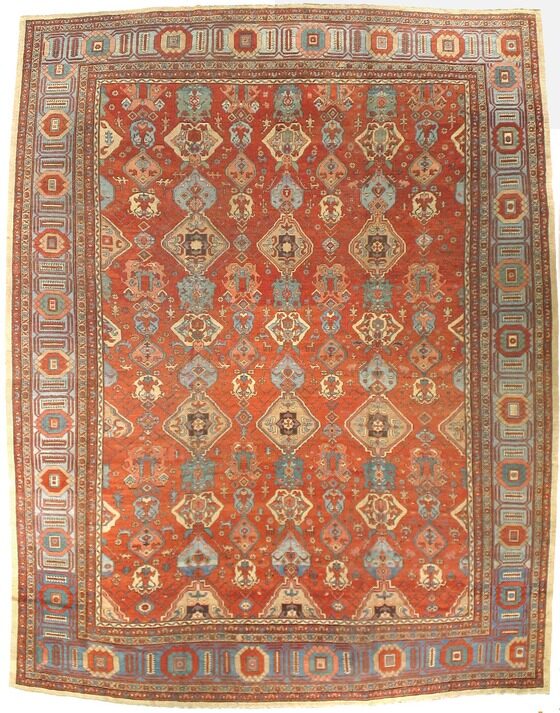
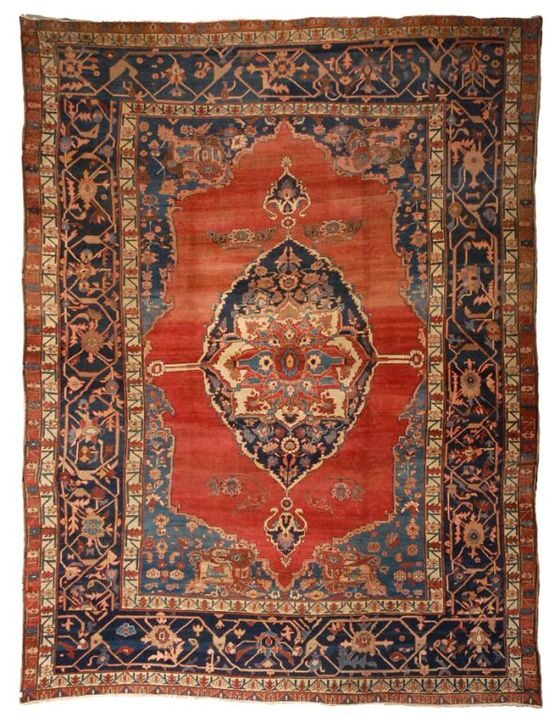
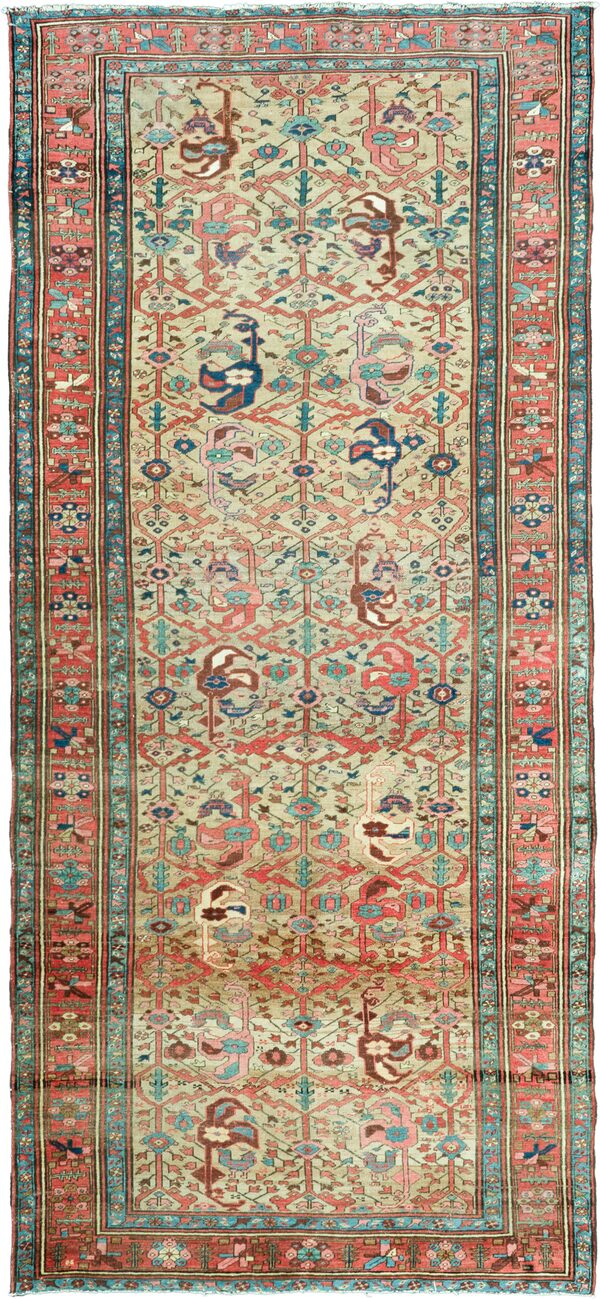
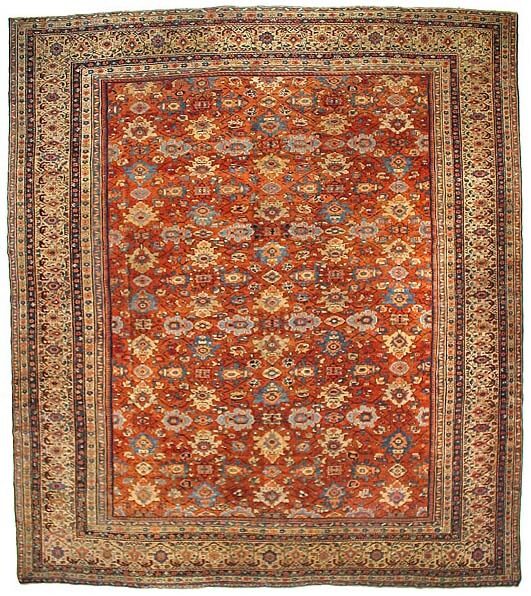
Abrash is a change in hue or saturation within an intended single color of a woven rug. It often appears when a weaver moves from one batch of dyed yarn to another, or when yarn within a batch takes color differently. Abrash can be incidental or intentional. It is not automatically fading, damage, age, natural dye, handmade proof, quality, authenticity, or value.
The word is most often used for tonal shifts that belong to the woven surface itself: a blue field moves from deep indigo to a quieter blue, or an ivory border warms for several rows before returning. Some changes form clear transverse bands; others are mottled, gradual, confined to one motif, or deliberately distributed across the design.
What does abrash mean in a rug?
Abrash means visible variation within what reads as one rug color. The difference is carried by the yarns used in the weave, rather than produced only by soil, surface damage, lighting, or the direction of the pile.
Abrash may involve hue, value, or saturation. One red can become slightly more orange, darker, or quieter without turning into a separate design color. The change may be subtle enough to animate an open field or strong enough to create a distinct stripe.
At WOVEN, we treat abrash first as an observation: color changes within a nominal color area. Only then do we ask how it formed and what it means for the particular rug. This order matters because very different conditions can look alike in a single photograph.
What causes abrash?
Abrash commonly develops when yarn intended to be the same color differs between batches or within a batch. Fiber character, yarn preparation, dye ingredients, mordants, water, timing, temperature, concentration, rinsing, and the sequence in which yarn is used can all affect the final shade.
Hand-spun yarn can vary in diameter, twist, fiber blend, and surface, which may change the way color is absorbed and reflected. Separate dye baths can produce slightly different results even when the dyer aims for a match. When one yarn supply ends and another enters the weave, that difference can become a visible change in the rug.
Not every cause can be identified from appearance. A rug may combine old and new yarn, naturally colored and dyed fiber, intentionally blended tones, or several production stages. Abrash should therefore be described before it is explained. Laboratory analysis or documented production information may be needed to establish dye chemistry or a specific cause.
Why does abrash often appear in bands?
Abrash often forms bands because a rug is built progressively across rows. If one supply of pile yarn ends and a different shade replaces it, the change enters the surface along the part of the weaving sequence where that color is used.
In a broad single-color field, the shift may read as a line or band running across much of the rug. In a border or scattered motif, the same yarn change may appear only where that color occurs. A variation does not need to cross the entire width to qualify as abrash, and an irregular horizontal mark is not automatically abrash.
The band can also be graduated rather than abrupt. The traditional term describes incidental dye or yarn variation; contemporary design also uses “abrash” for a deliberately varied effect. WOVEN’s Modern Abrash and Hand Spun Wool Abrash categories show that contemporary use. A collection name does not establish how a particular color variation was produced.
How is abrash different from fading, shading, stains, and repairs?
Abrash differs from fading, shading, stains, dye bleed, soiling, and repairs in where the color change sits and how it relates to light, yarn, structure, and use. Several clues should agree before the variation is named.
| Condition | Typical evidence and caution |
|---|---|
| Abrash | Evidence: A stable shift within one intended color that follows yarn placement or weaving sequence; it may be banded, mottled, gradual, or localized to motifs. Caution: Appearance alone may not reveal the dye, age, or exact cause. |
| Pile-direction shading | Evidence: An area looks light from one direction and dark from another because yarn tips and sides reflect light differently. Caution: This is an optical or surface-orientation change, not necessarily a change in yarn color. |
| Light fading | Evidence: Change corresponds to exposure, such as a window, uncovered area, or comparison with protected pile, reverse, or former furniture footprint. Caution: Different dyes fade at different rates, so the boundary need not be perfectly even. |
| Stain or chemical alteration | Evidence: Irregular edges, localized penetration, residue, odor, stiffness, fiber change, or a shape connected to a spill or treatment. Caution: The affected color may lighten, darken, or shift hue; do not test it casually. |
| Dye bleed or migration | Evidence: Color moves beyond its intended yarn or motif into adjacent fibers, often after moisture or cleaning. Caution: Migration is not abrash and may require immediate professional assessment. |
| Soiling or wear | Evidence: Change follows traffic, edges, furniture, air flow, or differences in pile height and compaction. Caution: Cleaning can reveal pre-existing abrash, but an owner should not assume every dark band is removable soil. |
| Repair or reweaving | Evidence: Color change aligns with different pile height, yarn, knotting, foundation, outline, tension, or stitching. Caution: A skilled repair may be subtle; compare several structural clues. |
How can you tell abrash from pile-direction shading?
Abrash remains tied to the same yarn area as the viewer moves, while pile-direction shading changes with the angle of view and light. Rotate your position around the rug before deciding that the color itself is different.
Cut pile has a direction. Looking into the pile can make a color appear deeper; looking with it can make the same yarn appear lighter. Vacuum tracks, compression, and areas where pile has reversed can create patches that resemble water marks or color changes.
View the rug from opposite ends, then under diffuse light and raking light. If the light and dark relationship reverses, pile orientation is probably contributing. Abrash may still coexist with shading, so a stable tonal difference should be checked in more than one viewing condition.
How can you tell abrash from fading?
Abrash usually follows the placement of yarn in the weave, while fading usually follows the history of exposure. Compare the visible surface with protected areas and ask whether the boundary makes more sense as a weaving sequence or a lighting pattern.
Light damage is cumulative and irreversible. It can affect natural and synthetic colorants, and different colors within one rug may respond at different rates. A sunlit end, exposed center, or area outside a furniture footprint may therefore shift unevenly.
Front-to-back comparison can help, but it is not conclusive: the reverse may have different soil, wear, oxidation, or finishing. A specialist may also compare pile tips with less-exposed fiber nearer the foundation without pulling or cutting the yarn. No owner should separate pile or perform a chemical test to settle the question.
Make a repeatable color-variation record
Document the same area under stated viewing conditions before assigning a cause to a color difference. Use an overview to locate the area, then compare opposite viewpoints without changing the rug’s position or the lighting. Record what changes and what stays fixed; mixed causes and an indeterminate result are valid conclusions.
- Locate the area. Record rug ID, date, orientation and an overview with the area marked on a copy of the photograph.
- Repeat the view. Photograph from opposite ends under the same lighting. Keep exposure and white balance consistent where practical, and note any difference in angle or distance.
- Describe the evidence. Does the difference remain in the same yarn area, reverse with the viewpoint, or correspond to a known exposure boundary? Record these as observations, not diagnoses.
- Request the missing comparison. A specialist may need protected areas, the reverse, repair mapping or treatment history. Do not pull pile apart or try cleaning to create evidence.
Use separate records for suspected abrash, fading and pile reversal. A single rug may contain all three, so three photographs of one unexplained patch are not three confirmed examples. Retain the reviewer’s conclusion and the reasons for it with the images.
Does abrash prove that a rug uses natural dyes?
Abrash does not prove that a rug uses natural dyes. Natural and synthetic systems can both show differences between yarn or dye lots, and makers can blend shades deliberately. Uneven fading can coexist with abrash, but fading is a later color change and should be described separately.
Likewise, visual uniformity does not prove synthetic color. Skilled dyeing, adequate yarn preparation, careful batch planning, and intentional blending can produce a controlled field with natural or synthetic systems.
Dye identification requires more than a color impression. Documentation, comparative study, specialist examination, and, when justified, appropriate analysis may be needed. Priority should be given to what can be responsibly observed: the hue shift, its placement, depth, boundary, and relationship to the weave.
Does abrash prove that a rug is handmade or antique?
Abrash does not by itself prove that a rug is handmade or antique. Hand production and small-batch yarn use can create abrash, but contemporary and machine-made rugs can imitate or deliberately engineer tonal variation.
A handmade rug can also be remarkably uniform. Construction should be evaluated through the foundation, pile attachment, reverse, sides, ends, materials, and several agreeing physical clues. Age requires separate evidence from structure, materials, design, condition, repairs, documentation, and historical context.
WOVEN's antique Persian rugs, antique Turkish rugs, and vintage rug collection provide different contexts in which color variation may appear. The category label still cannot explain the variation in an individual object without inspection.
Is abrash a defect, and does it affect value?
Abrash is not automatically a defect or a virtue. Its effect depends on the weaving tradition, design intent, scale, placement, transition, condition, rarity, and the expectations attached to the individual rug.
Subtle variation can give a large open field depth and movement. A sharp unintended band can interrupt a formal composition. In a contemporary rug, tonal shifts may be the central design device; in another context, an unexpected mismatch may fall outside the maker's approved standard.
Value is equally contextual. Abrash can contribute character and visual interest, but it does not create age, rarity, provenance, quality, or market demand. An appraisal should distinguish original variation from fading, alteration, damage, repair, and later finishing before assigning significance.
How should designers evaluate abrash in a room?
Designers should evaluate abrash at the full scale and orientation in which the rug will be seen. A small detail can make variation look stronger or weaker than it will across the complete field.
Long bands can widen a room visually when they run across the primary sightline or emphasize length when they align with it. Mottled abrash can soften a solid field and connect adjacent materials that are similar but not identical in tone. Strong shifts can compete with fine furniture or create a deliberate horizon beneath it.
Check the rug in morning, afternoon, and electric light, and view it from every major approach. Pile direction and sheen can amplify or suppress the underlying yarn variation. Photograph the whole rug and details with orientation notes; do not approve from a cropped image alone.
WOVEN's broader all-antiques collection offers a useful reminder that color belongs to the whole object: drawing, scale, pile, wear, materials, and room light all affect how variation reads.
What should be checked before cleaning a rug with color variation?
Before cleaning a rug with color variation, document the pattern and determine whether the change is likely woven color, soil, fading, staining, dye migration, repair, or a combination. Cleaning should not be used as a diagnostic experiment.
Professional colorfastness assessment may be necessary because moisture can move unstable color. Dye transfer during cleaning is not abrash; it is a change to the textile. Valuable, antique, fragile, previously repaired, chemically treated, or compositionally uncertain rugs should be reviewed by an appropriate rug and textile specialist.
Cleaning may make existing abrash easier to see when surface soil is removed, but it should not be promised to even out color. Attempts to bleach, overdye, spot-treat, or “correct” variation can alter original material and complicate future care, attribution, and value.
How should you evaluate color variation in a rug?
Evaluate color variation by mapping what remains constant and what changes. The following six lenses provide a practical review framework: continuity, direction, depth, boundary, structure and context. They organize observations; they do not replace examination by a rug or textile specialist.
- Continuity: Does the shift stay within one intended color, repeat in related motifs, or cross unrelated colors and materials?
- Direction: Does it follow weaving rows, pile orientation, a traffic path, a window, furniture, or a spill?
- Depth: Is the difference carried through the yarn, limited to pile tips, or visible only from one angle?
- Boundary: Is the transition gradual, banded, sharply outlined, feathered, migrated, or aligned with a repair?
- Structure: Do pile height, knotting, yarn, foundation, tension, sides, or stitching change with the color?
- Context: What do the rug's age evidence, materials, design, condition, exposure, treatment history, and documentation support?
Record the answer for several areas rather than one dramatic detail. The conclusion may be abrash, fading, shading, stain, migration, soiling, repair, mixed causes, or indeterminate. Honest uncertainty is more useful than a confident label unsupported by the object.
What misconceptions about abrash should buyers avoid?
The most common abrash misconceptions turn a nuanced visual feature into a shortcut for authenticity or quality. Abrash should add evidence, not end the examination.
- “Abrash proves natural dyes.” Natural and synthetic dye systems can both show variation.
- “Abrash proves a rug is handmade.” Tonal variation can be simulated; construction needs separate evidence.
- “Abrash proves age.” Contemporary rugs can use intentional or incidental abrash.
- “Any horizontal stripe is abrash.” Fading, soil, pile reversal, staining, repair, and dye migration can also form bands.
- “Abrash is always desirable.” Its visual and market significance depends on the rug and context.
- “Abrash is always a defect.” It may be inherent, accepted, or deliberately designed.
- “Cleaning will remove it.” True abrash is color in the woven yarn, not surface soil.
- “A photograph is enough.” Light, screen color, editing, crop, and pile direction can misrepresent variation.
What is the best way to understand abrash?
Understand abrash as color variation embedded in the woven surface, then test that description against direction, depth, boundary, structure, and history. Abrash can record material and making, or become a deliberate contemporary design tool. Its meaning is never automatic: distinguish it from damage, preserve what is original, and let the whole rug determine its significance.