knowledge library / Swedish and Scandinavian Rugs in the UK: Vintage Pieces or Skala?
For a UK home, choosing between a vintage Scandinavian rug and a new Swedish-inspired design starts with what you want to buy: an existing object with a particular history, or a new interpretation of the design tradition. WOVEN PLACE offers both routes through its vintage Scandinavian selection and Skala, a series of original STUDIO WOVEN rugs.
The distinction is useful even when two rugs share a geometric pattern or a similar palette. A vintage piece comes with its own dimensions and condition. A new design should be considered through its current specification and available options. Appearance alone does not tell you which kind of rug you are looking at.
Begin with the individual vintage rug
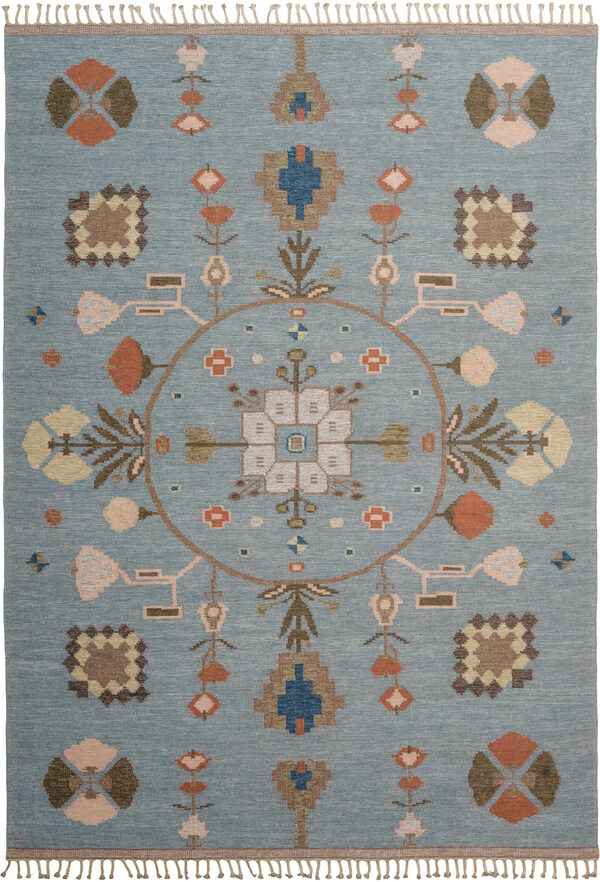
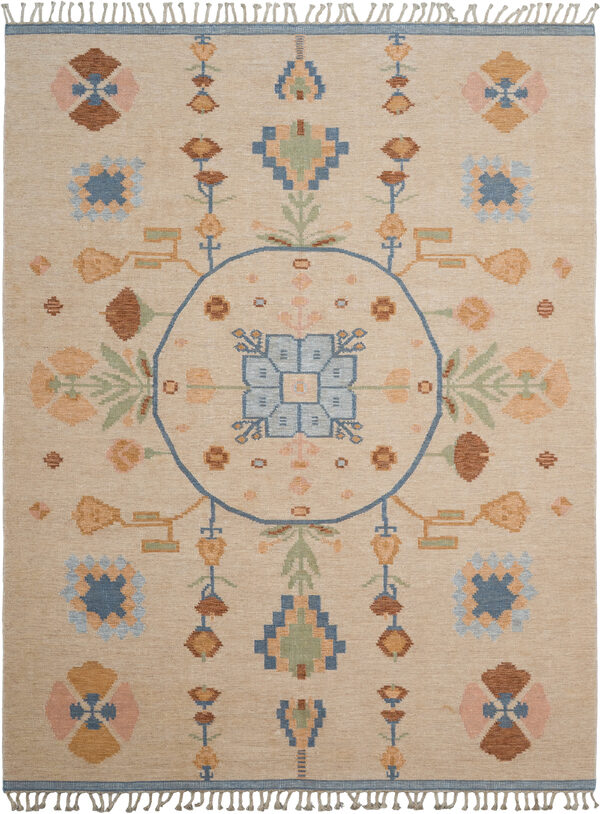
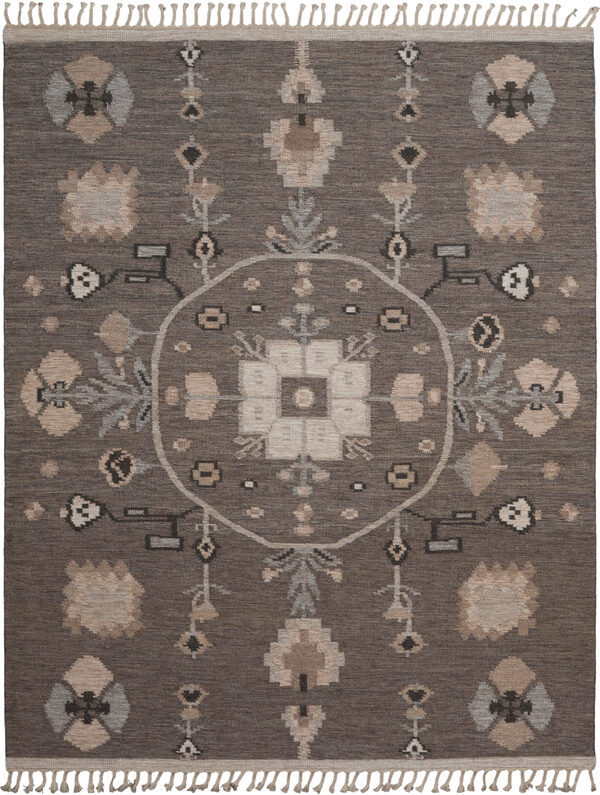
Our vintage Scandinavian rugs offer existing pieces to assess on their own terms. Ask what is known about the country of origin, approximate date and designer or workshop, where an attribution is given. Keep that description with the rug reference.
Measure the piece against the furniture plan early. A rug that looks generous in an isolated photograph may leave a chair just outside its edge. Conversely, a smaller rug may work well in a reading area where you want its full design to remain visible.
Condition belongs in the same decision. Request the available description and photographs, including areas of wear or repair. Establish what has been documented about the rug rather than treating a faded palette, a signature or a familiar motif as a complete account of its history.
Skala is a new WOVEN design series
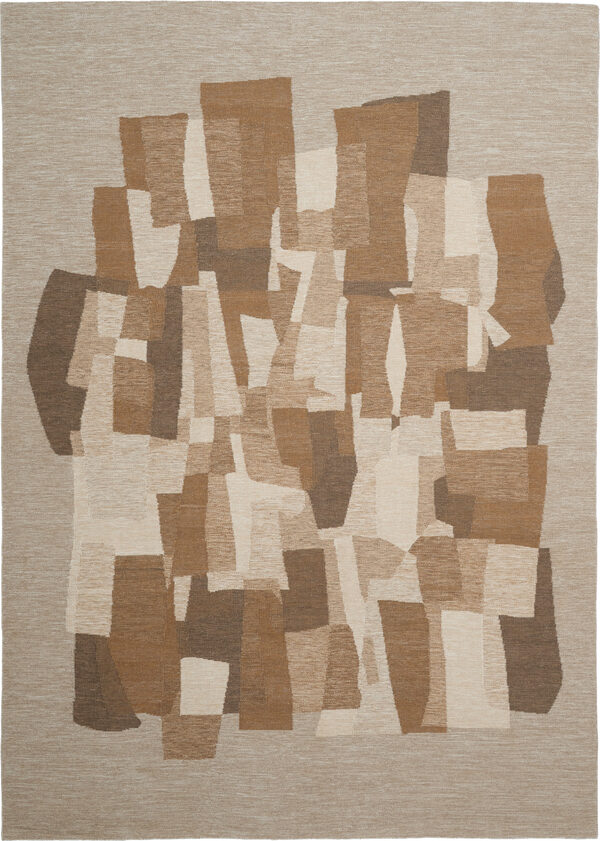
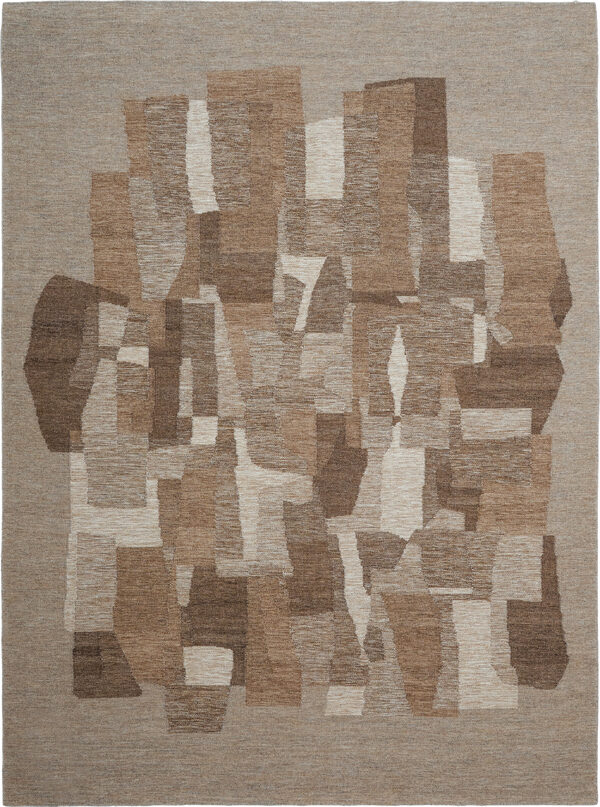
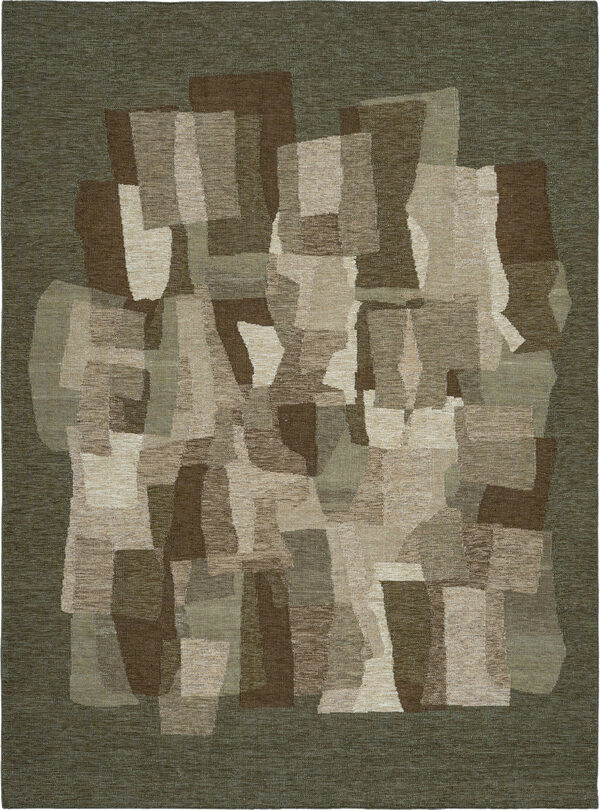
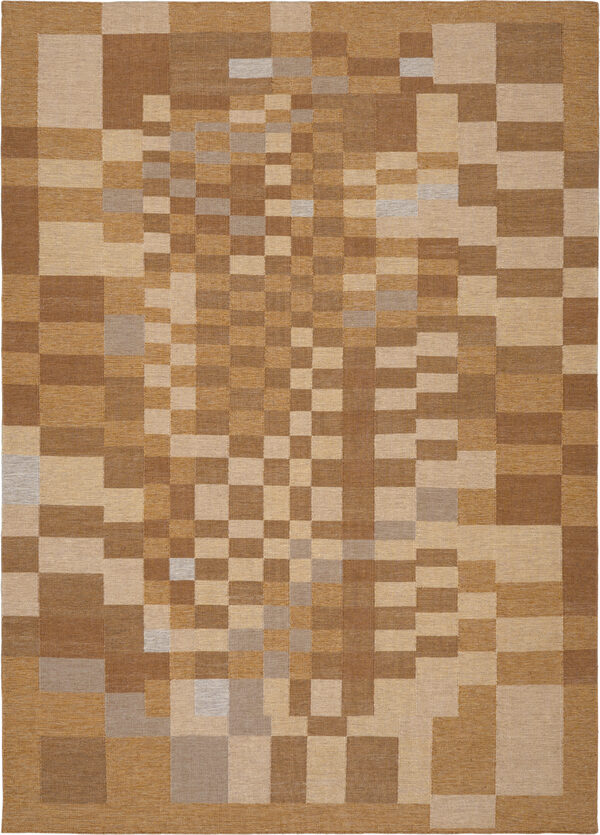
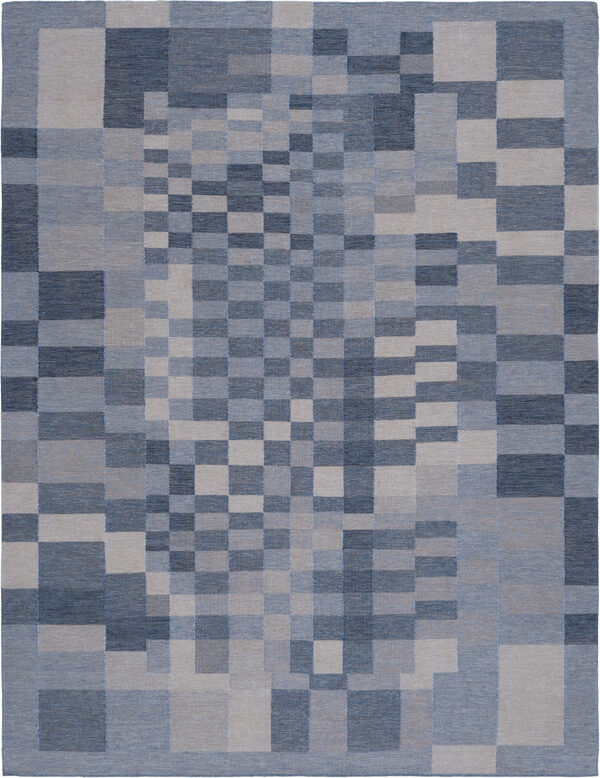
Skala takes its name from the Swedish word for scale. Its original designs draw on the geometry of Swedish modernism and the colour relationships of traditional röllakan weaving. The series explores those references through wool, linen and silk, with the current specification of each design guiding a purchase.
Skala belongs to STUDIO WOVEN. It is a contemporary interpretation of Swedish rug design, not a vintage Swedish object. Swedish inspiration also does not establish Swedish manufacture; use the individual product record for origin and construction information.
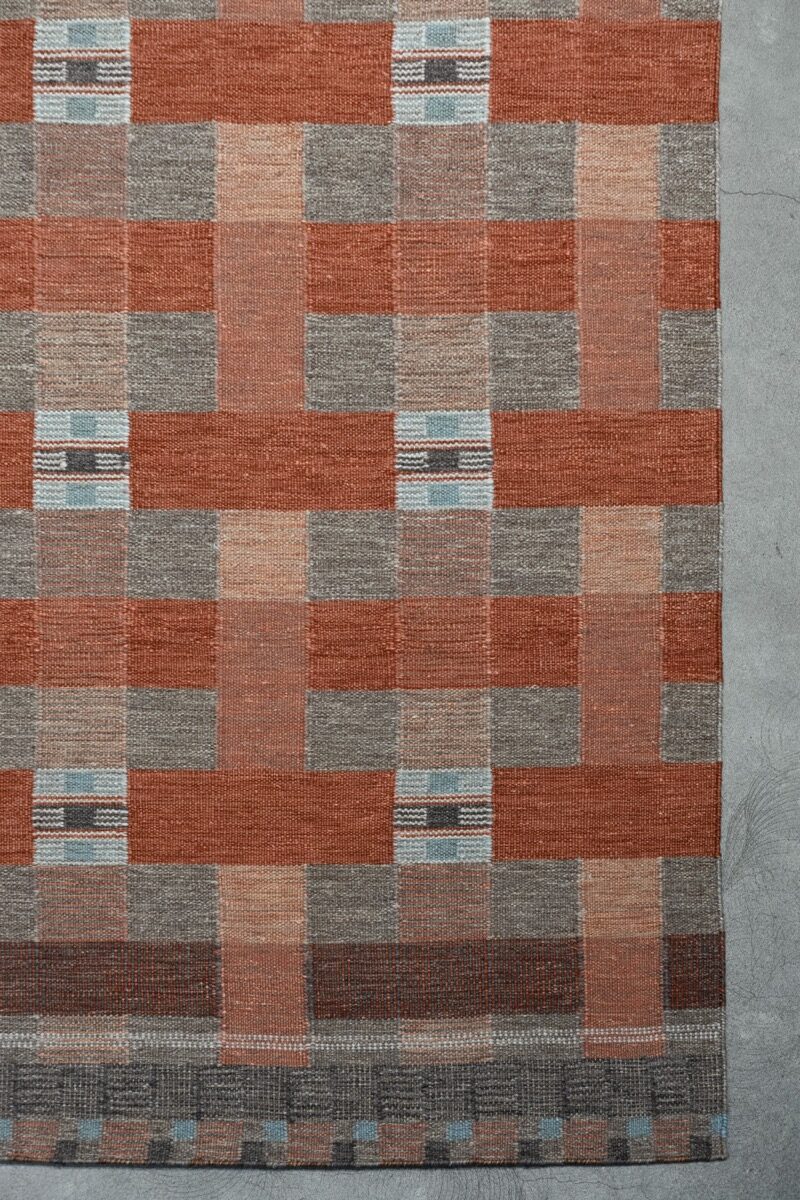
In the featured Takt Vermilion detail, broad red-orange bands cross grey and pale-blue areas. Changes within the yarn colours remain visible across the geometric pattern. This is a useful way to look at Skala: consider both the large shapes you read across the room and the colour variation you notice close to the surface.
Compare what each route asks of the room
| Question | Vintage Scandinavian piece | Skala design |
|---|---|---|
| What is the starting point? | An existing object with its own dimensions, drawing and condition | A current original design from STUDIO WOVEN |
| What should accompany the reference? | Available origin, date and attribution information, condition details and exact measurements | The specification, dimensions, colourway and availability of the selected design |
| What may need to stay flexible? | The furniture arrangement or placement, to accommodate the individual rug | The selection or proposed order, according to the options confirmed for that design |
If the history of the object is central to the purchase, give the documentation as much attention as the pattern. If a new design is the priority, compare the available Skala references against the room's materials and measured layout.
Read the geometry with the furniture in place
A geometric rug can give structure to a room, but the furniture determines how much of that structure remains visible. Mark the sofa, chairs and table over a full image of the proposed rug. Look for a major band hidden beneath the sofa or a strong intersection landing directly under the table.
For an illustrative contemporary flat with plain upholstery and open shelving, a stronger rug pattern could carry much of the colour. In a room already filled with patterned textiles, you might prefer a closer relationship between the rug's colours. These are choices about the whole scheme; the Scandinavian label does not require a neutral interior.
Compare the rug with the actual floor and fabric references. A colour that seems secondary in the product image may become more noticeable beside a similar shade in the upholstery. Decide whether you want that connection before repeating it elsewhere in the room.
Build a shortlist you can compare
Choose a small number of references and give each a reason to remain on the list. One may offer the right proportion, another a useful colour relationship, another an object history that matters to you. Keep the dimensions visible while comparing them.
Our London showroom is the contact point for discussing a UK enquiry. Send the vintage or Skala references with a measured plan and your main material samples, and check what is available to view before travelling. For a specific piece or order, establish availability and delivery arrangements as part of that conversation.