knowledge library / Scandinavian Rugs Explained
Scandinavian rugs are known for a particular kind of balance. They can feel quiet without becoming plain, decorative without becoming heavy, and deeply crafted without calling too much attention to themselves. That restraint is a large part of their appeal. In interiors that value warmth, texture, and clarity, Scandinavian rugs often bring exactly the right amount of pattern and presence.
For buyers and designers, Scandinavian rugs are often compelling because they feel both practical and refined. They tend to sit naturally in a room rather than dominate it. Their colors are often softened, their motifs are clear but not rigid, and their woven character gives them a tactile depth that works especially well in homes that lean modern, minimal, or quietly layered.
What is a Scandinavian rug?
A Scandinavian rug is a rug woven within the design and textile traditions of the Nordic countries, often associated with Sweden, Finland, Norway, and Denmark. While the category includes a range of styles, Scandinavian rugs are often recognized for their clean geometry, restrained palettes, and strong sense of material honesty.
Many Scandinavian rugs feel grounded in utility as much as decoration. They are often designed to bring warmth and softness into interiors while maintaining a sense of order and visual calm. That is part of what makes them so enduring. Even when they include pattern, they rarely feel excessive.
What defines Scandinavian rugs?
Scandinavian rugs are usually defined less by one specific motif and more by an overall design sensibility. They often emphasize balance, simplicity, and craftsmanship. Their patterns may be geometric, abstract, or lightly folkloric, but they tend to be arranged with a clarity that feels easy to live with.
Some of the qualities often associated with Scandinavian rugs include:
- Restrained color palettes
- Geometric or simplified motifs
- A strong woven structure
- Warmth without visual heaviness
- A balance of utility and design
This combination is what allows Scandinavian rugs to work across many types of interiors. They often feel composed, but never cold.
The design language behind Scandinavian rugs
One of the reasons Scandinavian rugs remain so relevant is that they reflect a broader design tradition centered on simplicity, function, and natural beauty. The best examples feel thoughtful but not overworked. They are often rooted in everyday use, but elevated by proportion, texture, and a subtle understanding of color.
This design language gives Scandinavian rugs a different presence from more ornate antique traditions. Instead of relying on density or decorative complexity, they often create interest through spacing, contrast, and material character. That makes them especially appealing in rooms where you want softness and pattern without too much visual noise.
Common colors and motifs in Scandinavian rugs
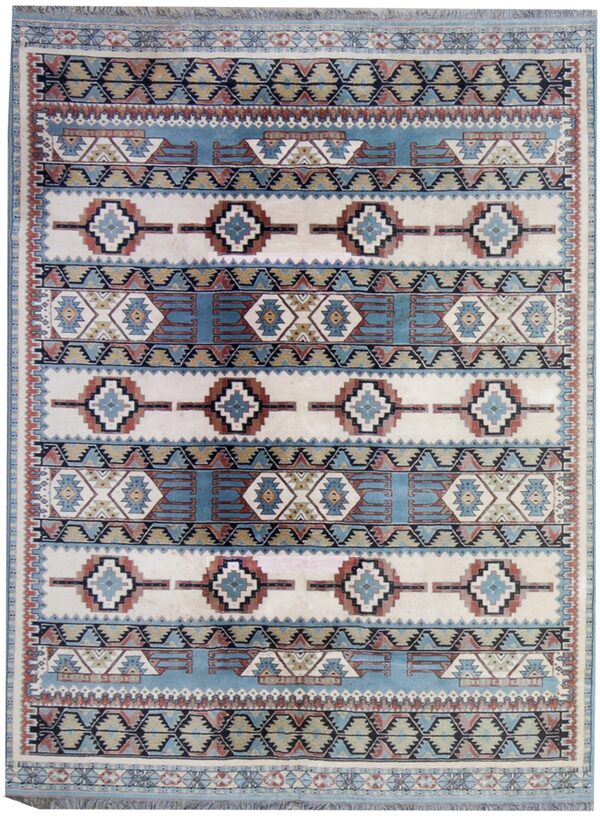
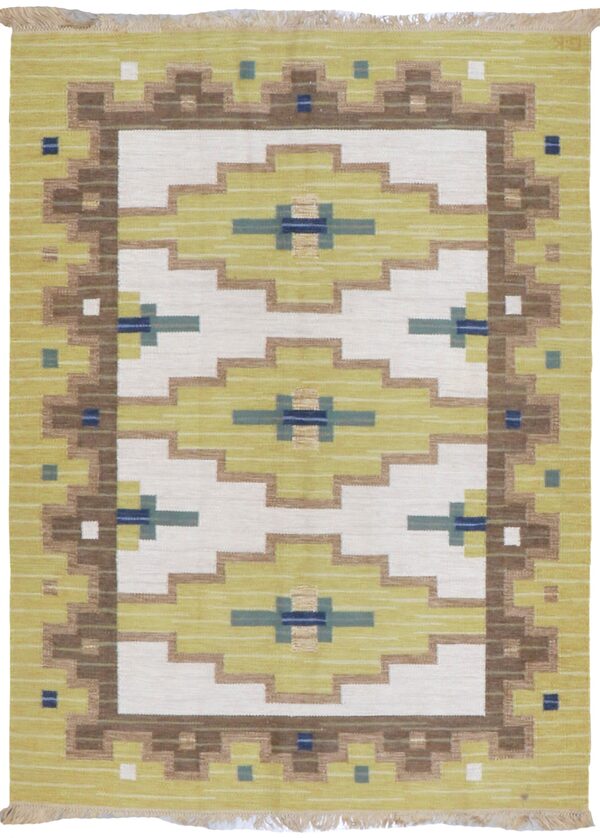
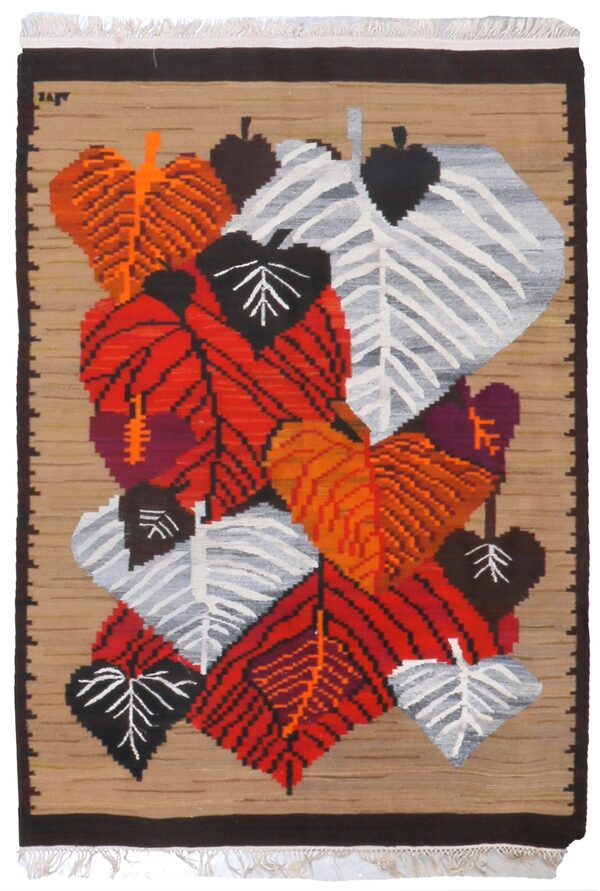
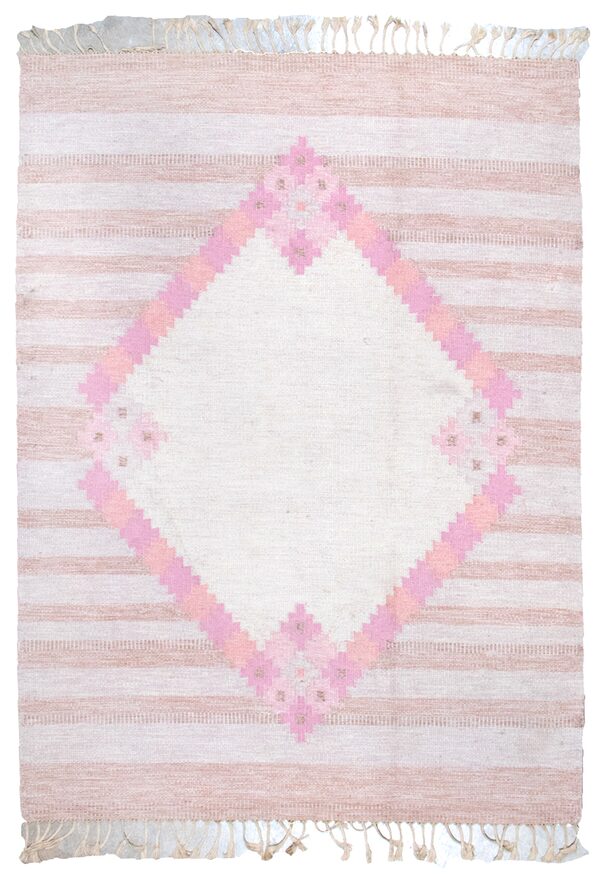
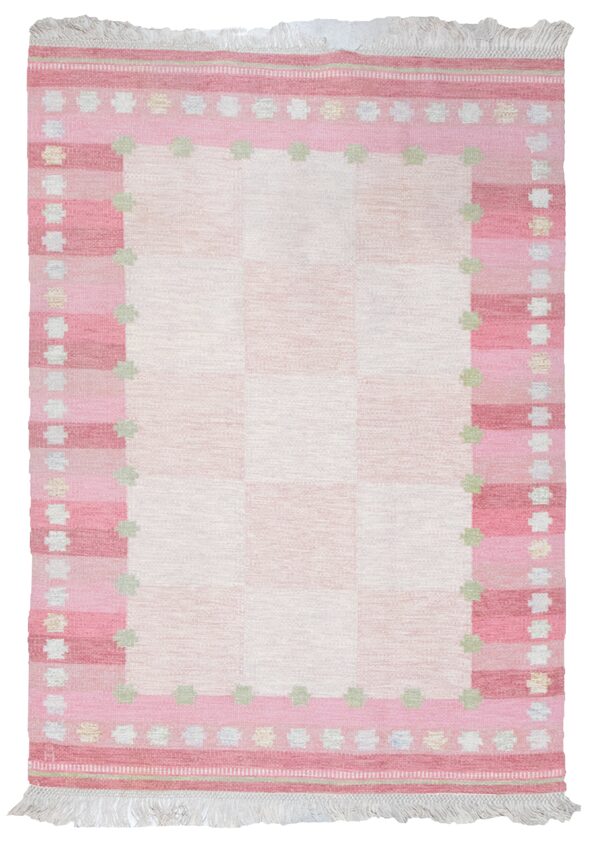
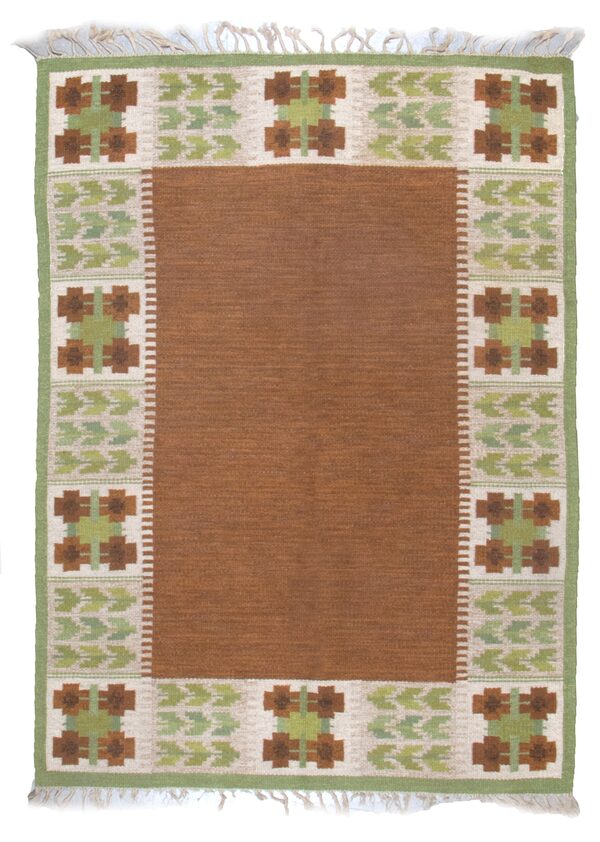
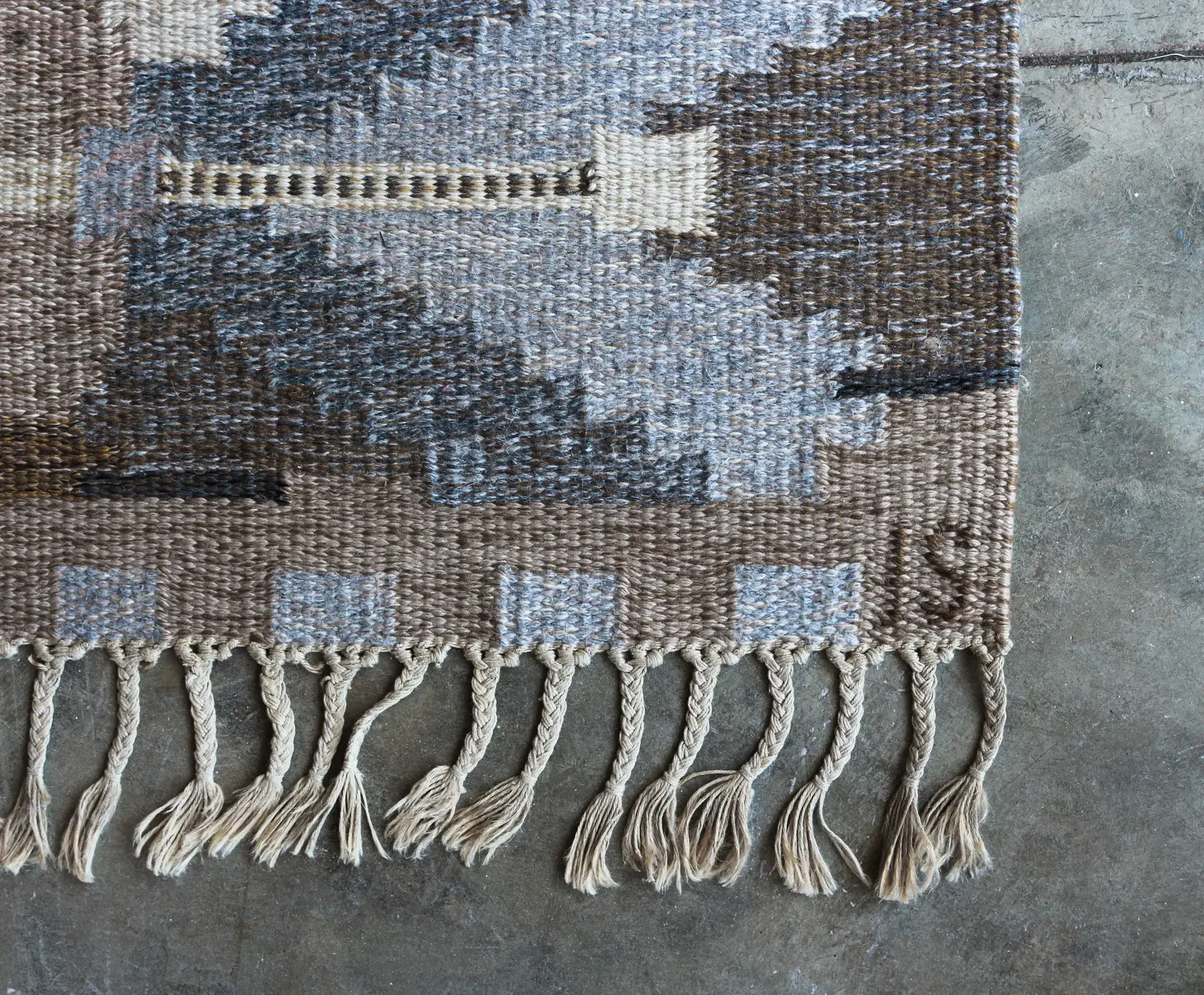
Scandinavian rugs are often associated with soft, muted color palettes. Many feature tones such as ivory, cream, beige, gray, soft blue, muted green, brown, charcoal, and dusty rose. Even when color is used more boldly, it is often handled in a way that still feels balanced and calm.
Common motifs include:
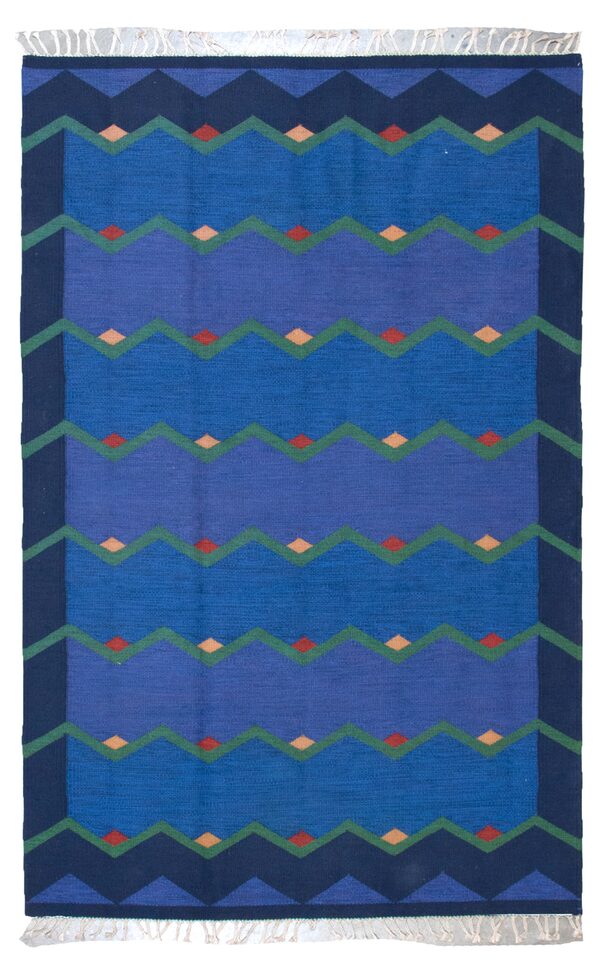
- Diamonds and stepped forms
- Stripes and linear patterns
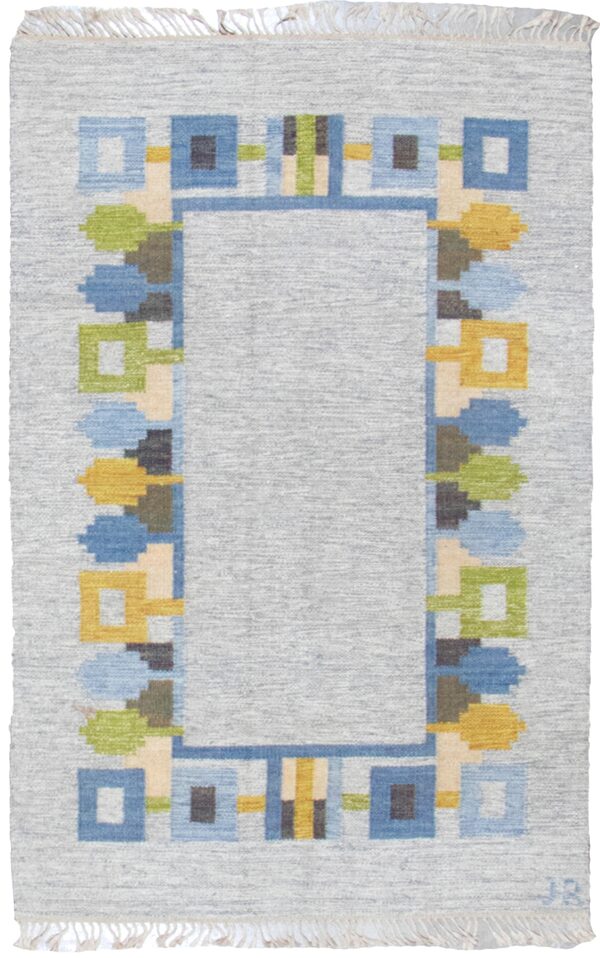
- Abstract geometry
- Stylized floral or folk-inspired elements
- Open compositions with clear spacing
What matters just as much as the motif itself is the way it is arranged. Scandinavian rugs often feel breathable. Their patterns usually have room around them, which helps them sit easily within a space.
How Scandinavian rugs differ from other rug styles
Compared with more decorative traditions like Turkish, Oushak, or Moroccan rugs, Scandinavian rugs often feel more restrained and architectural. They usually rely less on ornamental density and more on line, rhythm, and material balance.
That difference makes them especially useful in interiors where the goal is warmth without formality. A Turkish or Oushak rug may bring more historical ornament. A Moroccan rug may bring more texture and intuitive pattern. A Scandinavian rug often brings a quieter kind of structure. It can add softness and design interest while still preserving a feeling of visual calm.
Why Scandinavian rugs work so well in modern interiors
Scandinavian rugs are especially well suited to modern interiors because they share many of the same values. They tend to respect space, support clean architecture, and add warmth without overwhelming the room. Their woven character also brings an important layer of texture to spaces that might otherwise feel too smooth or controlled.
In modern homes, Scandinavian rugs often work well because they:
- Soften minimal architecture
- Add pattern without clutter
- Bring warmth to restrained palettes
- Support natural materials like wood, stone, and linen
- Feel timeless rather than trend-driven
That versatility is part of what keeps them relevant. They do not force a room in one direction. They simply make it feel more complete.
Where Scandinavian rugs work best
Living rooms
Scandinavian rugs are especially effective in living rooms where the goal is to create warmth and softness without making the space feel too formal. Their quieter pattern language often works well beneath clean-lined seating and natural wood furniture.
Bedrooms
In bedrooms, Scandinavian rugs help create a calm and grounded atmosphere. Their softer palettes and woven texture work especially well with linen bedding, pale woods, and understated interiors.
Dining rooms
Because many Scandinavian rugs have structured compositions and a more stable visual rhythm, they can work beautifully beneath dining tables, especially in interiors with simple furniture and clear architecture.
Studies and reading rooms
These rugs also work well in smaller spaces where a little pattern and warmth can make the room feel more settled without adding too much visual activity.
How to choose the right Scandinavian rug
When choosing a Scandinavian rug, it helps to think about the room in terms of balance. Consider how much texture the space needs, whether the palette should stay quiet or become slightly more expressive, and how the rug will relate to the furniture around it.
It is also worth paying attention to:
- The openness or density of the pattern
- The softness of the palette
- The scale of the rug relative to the room
- The woven texture and overall material presence
- Whether the rug supports the architecture rather than competing with it
The best Scandinavian rugs often feel easy rather than insistent. Their strength tends to come from proportion, texture, and clarity.
Final thoughts
Scandinavian rugs continue to endure because they bring together warmth, simplicity, and craftsmanship in a way that feels natural to live with. They do not need elaborate ornament to have presence. Their appeal often comes from exactly the opposite: a sense of restraint that allows materials, pattern, and proportion to speak more clearly.
For anyone drawn to interiors that value softness, structure, and quiet depth, Scandinavian rugs remain one of the most versatile categories to explore. They can anchor a room gently, add character without excess, and create the kind of atmosphere that feels lasting rather than temporary.
Frequently asked questions
What is a Scandinavian rug?
A Scandinavian rug is a rug woven within the textile and design traditions of the Nordic countries, often recognized for geometric motifs, restrained palettes, and a balance of function and craftsmanship.
What defines Scandinavian rugs?
Scandinavian rugs are often defined by clean geometry, softened colors, strong woven structure, and a quiet design language that feels warm without being visually heavy.
Do Scandinavian rugs work in modern interiors?
Yes. Scandinavian rugs work especially well in modern interiors because they add warmth, texture, and pattern while maintaining a sense of simplicity and visual calm.
What colors are common in Scandinavian rugs?
Common Scandinavian rug colors include ivory, cream, beige, gray, soft blue, muted green, brown, charcoal, and dusty rose.
How are Scandinavian rugs different from Turkish or Moroccan rugs?
Scandinavian rugs often feel more restrained and architectural, while Turkish rugs tend to feel more decorative and Moroccan rugs more textural and intuitive.
Where do Scandinavian rugs work best?
Scandinavian rugs work especially well in living rooms, bedrooms, dining rooms, and studies where warmth, structure, and quiet pattern can support the overall atmosphere of the room.