knowledge library / Rug Size Guide for Living Rooms, Bedrooms, and Dining Rooms
Size a living-room rug around the seating group, a bedroom rug around the bed and walking area, and a dining-room rug around the table with chairs pulled out. Common sizes are starting points. Measure the furniture first, mark the proposed rug on the floor, and test movement before choosing a standard size, a one-of-one rug, or a custom dimension.
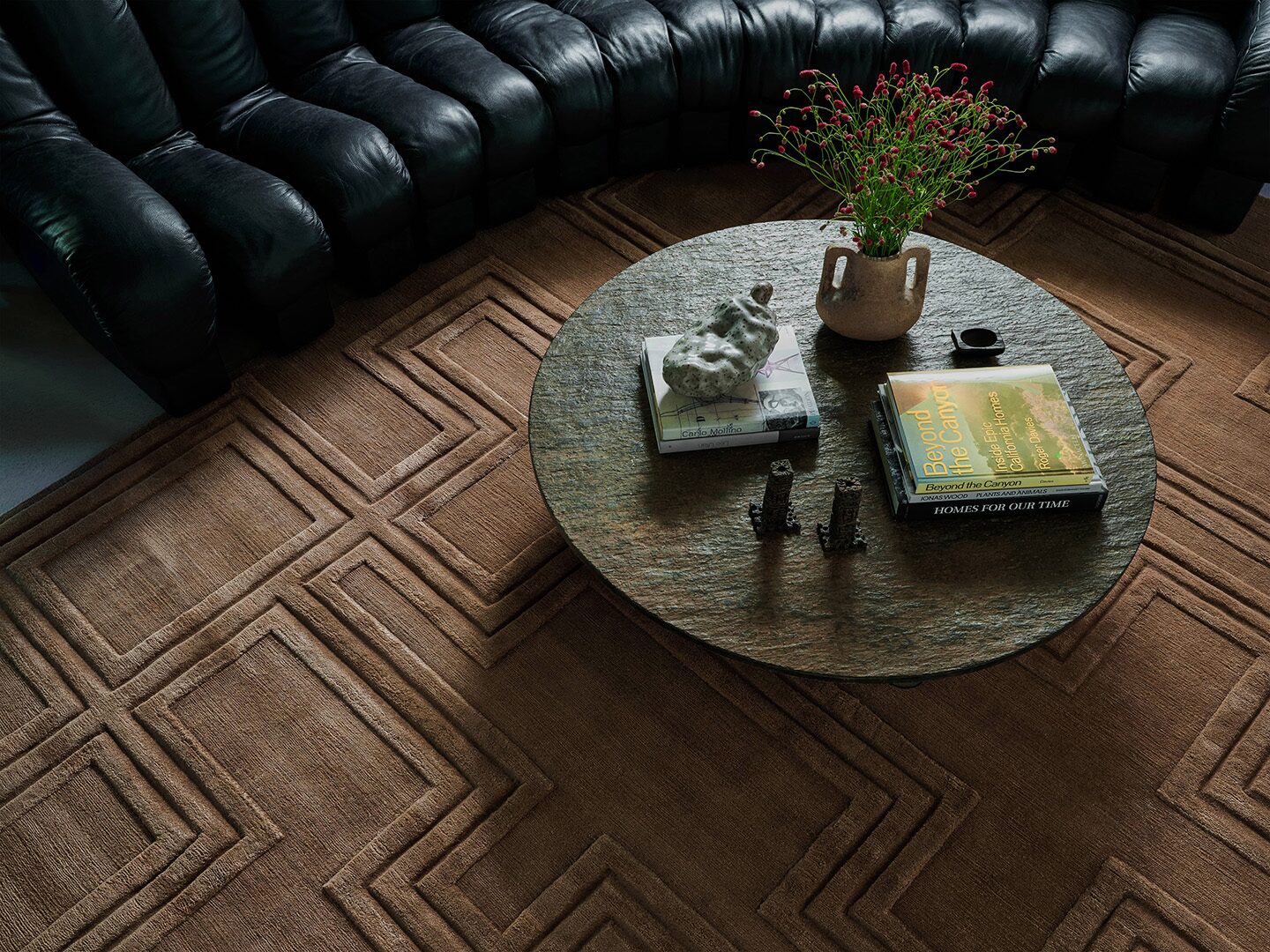
A rug should not look as though it was dropped into the center of a room after everything else was finished. It should define the place where life happens: the seating group, the bed, the dining table, the reading corner. When the scale is right, a room feels calmer almost immediately.
Jump to living-room sizing, bedroom sizing, or dining-room sizing.
Quick Rug Size Guide By Room
| Room | Common Starting Sizes | What To Check Before Choosing |
|---|---|---|
| Living room | 8x10, 9x12, 10x14, 12x15 | The rug should connect the sofa, chairs, and coffee table rather than sit only under the coffee table. |
| Bedroom with queen bed | 8x10 or 9x12 | Allow enough rug to show on both sides of the bed and beyond the foot. |
| Bedroom with king bed | 9x12, 10x14, or larger | The rug should extend beyond the nightstands or begin just in front of them, depending on room depth. |
| Dining room | 8x10, 9x12, 10x14, or custom | Add generous clearance around the table so chairs remain on the rug when used. |
| Entry or hallway | Runner or narrow vintage piece | Leave breathing room at the edges and keep doors, vents, and transitions clear. |
These sizes are not rules; they are a way to begin. If a room has unusual proportions, a large sectional, a floating furniture plan, or an architectural feature that changes the center of gravity, the correct rug may be larger, narrower, layered, or custom.
How To Size A Living Room Rug
In a living room, the rug should anchor the conversation area. A small rug centered under the coffee table can make even good furniture feel scattered. A larger rug gives the sofa and chairs a shared foundation, which is why living rooms so often improve when an 8x10 becomes a 9x12 or a 9x12 becomes a 10x14.
A Measured Living-Room Example
For an illustrative 90-inch sofa, placing the 10-foot edge of an 8 × 10-foot rug parallel to the sofa leaves 15 inches beyond each sofa end when centered: (120 − 90) ÷ 2. That establishes width only. Tape out the rug's 8-foot depth and check that the chairs also join the rug. If their front legs fall outside it, compare a larger size or revise the seating layout.
Front Legs On The Rug
The most flexible living room layout places the front legs of the sofa and chairs on the rug, with the back legs either on or off depending on the depth of the room. This is often the best choice when you want the room to feel grounded while still showing some floor around the perimeter.
Use this approach when the room is medium-sized, when the seating faces inward, or when you want a refined but not wall-to-wall effect. For many homes, a 9x12 rug is the first size that can do this comfortably; smaller rooms may work with an 8x10 if the furniture is scaled accordingly.
All Legs On The Rug
For larger rooms, open plans, or more formal seating groups, placing all major seating legs on the rug can make the room feel complete. This usually requires a 10x14, 12x15, or larger rug, depending on the furniture footprint.
The all-legs layout is especially effective when the furniture floats away from the walls. The rug becomes the architecture of the seating area, creating a room within a room.
When A Smaller Rug Can Work
A smaller rug can work when it is intentional: layered over a larger natural-fiber rug, placed in a compact reading area, or used as an antique or vintage accent where the object itself is the focus. What usually fails is not the small rug, but the lack of relationship between the rug and the furniture around it.
If the rug only fits beneath the coffee table and does not reach the seating, consider either sizing up or layering. WOVEN's vintage rugs and antique rugs can be especially compelling in layered rooms, where exact standard dimensions are less important than proportion, color, and placement.
How To Size A Bedroom Rug
In a bedroom, the rug should soften the daily path around the bed. The most common mistake is choosing a rug that disappears under the bed frame, leaving too little visible material where your feet actually land.
Queen Bed Rug Sizes
For a queen bed, an 8x10 rug is often the minimum size that feels balanced. It can sit under the lower two-thirds of the bed, extending beyond the sides and foot. A 9x12 gives more generous coverage and often feels better when the bed is flanked by nightstands or when the room has a larger footprint.
If the room is narrow, two runners or smaller rugs at the sides of the bed may be more graceful than forcing a large rectangle into a tight plan.
King Bed Rug Sizes
For a king bed, a 9x12 rug is a practical starting point, but a 10x14 or larger rug often creates a more luxurious proportion. The rug can begin just in front of the nightstands or sit fully beneath them if the room allows.
What matters is the visible reveal. You want enough rug on both sides of the bed to feel deliberate, not a narrow strip that vanishes beneath the bed.
Calculate the Rug Visible Beside the Bed
Visible rug at each side equals the rug's width across the bed minus the bed frame's outside width, divided by two. Measure the frame rather than relying on the mattress size. The examples below are hypothetical planning calculations with the longer rug edge running across the bed; head-to-foot placement must be checked separately.
| Illustrative bed-frame width | Rug and orientation | Visible rug at each side |
|---|---|---|
| Queen frame: 64 inches | 8 × 10 feet, with 120 inches across the bed | 28 inches: (120 − 64) ÷ 2 |
| King frame: 80 inches | 8 × 10 feet, with 120 inches across the bed | 20 inches: (120 − 80) ÷ 2 |
| King frame: 80 inches | 9 × 12 feet, with 144 inches across the bed | 32 inches: (144 − 80) ÷ 2 |
These side measurements do not establish coverage at the foot. An 8 × 10 may provide enough width beside a king frame while still being too short for the chosen placement, bench, or circulation. Decide whether nightstands sit fully on or fully off the rug, then verify the remaining rug depth beyond the bed.
Bedrooms With Benches Or Seating
If there is a bench at the foot of the bed, a lounge chair, or a small seating moment, account for those pieces before choosing the rug. The rug should relate to the whole bedroom composition, not only to the mattress size.
Quiet, textural pieces from modern rugs, modern flatweaves, or Studio WOVEN can work beautifully in bedrooms because they bring softness and material depth without overwhelming the room.
How To Size A Dining Room Rug
A dining room rug has to do more than look correct in a photograph. It has to work when chairs move. As a general planning principle, the rug should extend well beyond every side of the table so chairs remain on the rug when guests sit down and stand up.
For many dining rooms, that means adding at least two feet or more beyond the table on each side. The exact clearance depends on chair depth, table shape, and how people move through the room. If the chairs catch on the rug edge, the rug is too small for that dining setup, even if it looks fine when the chairs are pushed in.
Calculate Dining-Room Rug Size From the Table
As a planning starting point, add 24 to 30 inches beyond every table edge, then test the actual chairs. Add that allowance twice to each table dimension: rug width = table width + two side allowances; rug length = table length + two end allowances. Use the extended table size if leaves will be used.
| Illustrative table | With 24 inches at every edge | With 30 inches at every edge |
|---|---|---|
| 42 × 72 inches | 90 × 120 inches: 7 feet 6 inches × 10 feet | 102 × 132 inches: 8 feet 6 inches × 11 feet |
| 48 × 96 inches | 96 × 144 inches: 8 × 12 feet | 108 × 156 inches: 9 × 13 feet |
| 60-inch round | 108-inch diameter: 9 feet | 120-inch diameter: 10 feet |
For the 42 × 72-inch table, an 8 × 10-foot rug supplies 27 inches at the sides and 24 inches at the ends. Pull each chair out far enough for a person to stand and check that every leg remains supported. If that movement exceeds the allowance, increase the rug size and recheck the walkway outside it.
Rectangular Dining Tables
For rectangular tables, the rug should follow the table shape and leave a consistent border around it. An 8x10 may work for a smaller table, while a 9x12 or 10x14 is often better for six to eight chairs. In a long room, check both the chair clearance and the walkway around the table before committing.
Round Dining Tables
Round tables can sit on round, square, or softly proportioned rectangular rugs. The best choice depends on the room. A round rug can echo the table shape, while a square or rectangular rug may better align with the architecture. The same chair-clearance test still applies.
Material And Pile Matter
Flat or lower-pile rugs tend to be easier under dining chairs than very high pile or loosely textured pieces. If the rug is antique, delicate, silk, or heavily textured, consider how often the dining room is used and whether the piece can tolerate chair movement, spills, and repeated cleaning.
Standard, Antique, Vintage, And Custom Sizes
Standard rug sizes are helpful because they make comparison easier. But some of the most beautiful rooms do not rely on standard sizes at all. Antique and vintage rugs often have irregular or uncommon dimensions, and that can be part of their strength. A slightly narrower antique may be perfect for a library. A long vintage kilim may solve a hallway that no standard runner fits. A custom contemporary rug may be the cleanest answer for a room with exacting architecture.
The decision should begin with the room rather than the label on the rug. Measure the furniture group, mark the ideal rug footprint with painter's tape if needed, and then decide whether a standard size, an antique proportion, or a custom piece best serves the space.
For rooms that need a precise scale or a particular texture, WOVEN's contemporary rugs, antique recreations, and Studio WOVEN collections offer different paths: new production, historically informed design, or more tailored material expression.
How Much Floor Should Show Around A Rug?
There is no single border that works in every room. In a living room, the rug should relate to the furniture more than to the walls. In a bedroom, the exposed floor should frame the bed and keep circulation clear. In a dining room, chair clearance matters more than showing a perfect band of floor.
Still, some breathing room is usually important. A rug that nearly touches every wall can look like carpet unless that is the intended effect. A rug that floats too far from the furniture can make the room feel unfinished. The right border is the one that makes the furniture, architecture, and rug feel composed together.
Common Rug Sizing Mistakes
- Choosing from the coffee table alone. The rug should support the seating group, not only the object at the center.
- Ignoring chair movement in dining rooms. A dining rug has to work when chairs are pulled out, not just when the room is styled.
- Letting the bed hide the rug. A bedroom rug should be visible and felt on the sides and foot of the bed.
- Treating 8x10 and 9x12 as interchangeable. That extra foot or two can completely change whether furniture feels connected.
- Forcing a standard size into an unusual room. Antique, vintage, layered, or custom options may solve the room more naturally.
How To Measure Before Buying
- Measure the furniture arrangement, not just the room.
- Decide which furniture legs should sit on the rug.
- Mark the proposed rug footprint on the floor with tape.
- Check door swings, vents, hearths, built-ins, and circulation paths.
- For dining rooms, pull chairs out as they would be used and measure that footprint.
- Compare the ideal footprint with standard, antique, vintage, and custom possibilities.
If you are choosing between two sizes and both technically fit, the larger rug is often the calmer choice, especially in living rooms and bedrooms. The exception is when the larger size crowds the architecture or turns the rug into a near-carpet. Scale should feel generous, not swollen.
Frequently Asked Questions
Is an 8x10 rug too small for a living room?
An 8x10 rug is too small when it cannot connect the main seating pieces. It can work in compact rooms, apartments, or smaller seating groups, but many full-size sofas and chairs need a 9x12 or larger rug to feel properly anchored.
Should a sofa sit fully on a rug?
It can, but it does not always have to. Many living rooms work well with only the front sofa legs on the rug. Larger or floating seating plans often look better when all major seating legs sit on the rug.
What size rug works under a queen bed?
An 8x10 rug is a common starting point for a queen bed, especially when placed under the lower portion of the bed. A 9x12 rug usually feels more generous and balanced in a larger bedroom.
What size rug works under a king bed?
A 9x12 rug is often the minimum comfortable size for a king bed. A 10x14 or larger rug may be better when the room is spacious or when the rug needs to relate to nightstands, a bench, or a seating area.
How large should a dining room rug be?
A dining room rug should extend well beyond the table so chairs remain on the rug when pulled out. The right size depends on chair depth and room clearance, but if chair legs catch on the rug edge, the rug is too small.
Can an antique rug be the "wrong" size?
Yes, but antique rugs do not always need to follow standard sizing conventions. A rare or beautiful antique can work through layering, offset placement, or use in a more specific area of the room. The key is making the placement feel intentional.
Choosing The Rug That Makes The Room Feel Finished
Rug sizing is not only arithmetic. It is a design decision about where a room begins, how furniture relates, and what kind of atmosphere the space should hold. Measure carefully, but also look at the room as a whole. The right rug should make the furniture feel settled, the proportions feel calm, and the space feel ready to live in.