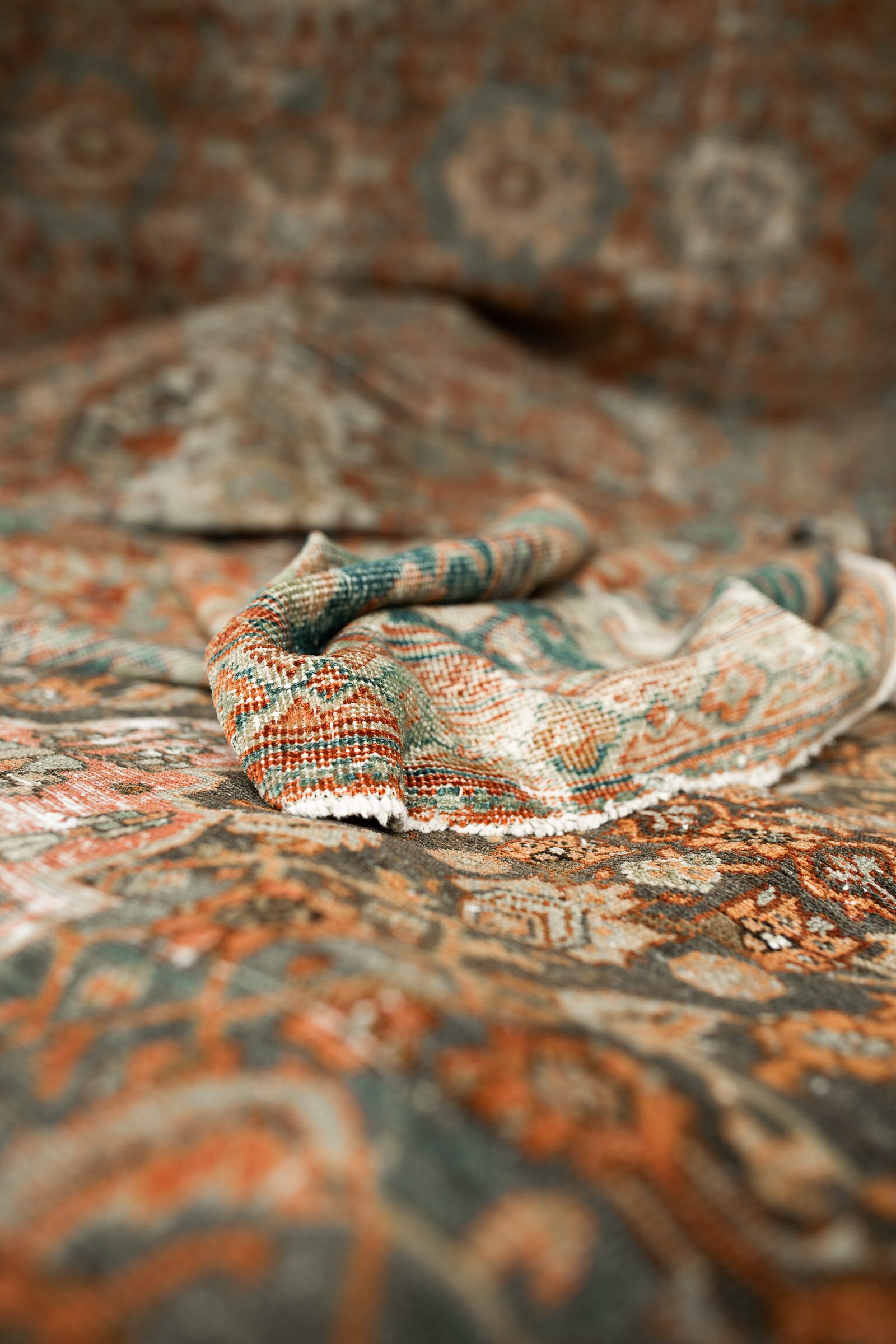
knowledge library / How to Source Antique and Vintage Rugs for a Design Project
The best way to source an antique or vintage rug for a design project is to begin with the room, not with the rug. Size, furniture layout, palette, desired character, condition tolerance, and daily use should narrow the search before age, origin, or pattern become the deciding factors. A beautiful rug can still be wrong for a project if it fights the architecture, arrives too small, or asks the client to live with wear they do not understand.
This is especially true with one-of-one pieces. Unlike a new rug that can often be adjusted in size, color, or construction, an antique or vintage rug brings its own proportions, surface, history, fading, repairs, and irregularities. Those qualities are the reason designers love them. They are also why sourcing should feel closer to due diligence than casual shopping.
Start With the Room Before You Start With the Rug
A good sourcing brief begins with the same questions a designer would ask before specifying any major piece: What is the room doing? Where is the furniture going? How much of the rug should be visible? Should the rug calm the space, bring age into a new interior, sharpen a palette, soften architecture, or carry the strongest pattern in the room?
Measure the room, but also measure the relationships inside it. In a living room, note whether the rug needs to catch all furniture legs or simply anchor the seating group. In a dining room, consider chair movement and the visual weight of the table. In a bedroom, decide how much reveal should appear around the bed. In a hallway or gallery, look closely at door swings, thresholds, and the way pattern will read in a long sightline.
Palette should be evaluated in the actual room context. Antique and vintage rugs often carry layered color: softened reds, oxidized browns, faded indigo, celadon, camel, ivory, tobacco, apricot, charcoal, or colors that shift under different light. A rug that looks quiet in a photograph may become much stronger next to pale upholstery or warm wood. A rug that looks faded online may bring exactly the right restraint into a room with polished stone, plaster, or lacquer.
Define the Character the Project Needs
The strongest antique and vintage rug choices usually begin with a character decision. Some rooms need a rug with age but little visual noise. Others need a graphic anchor, a worn field, a large-scale border, a tribal geometry, or a formal pattern that has softened over time. The sourcing process becomes more efficient when the team can name the quality they are looking for.
Character is not the same as style. A Persian rug, Turkish Oushak, Moroccan piece, Caucasian rug, European tapestry, or vintage kilim can each behave very differently depending on scale, color, wear, and placement. Instead of asking only for an origin or type, describe the role the rug should play: atmospheric, architectural, collected, ceremonial, relaxed, spare, textural, or quietly imperfect.
Understand How Antique and Vintage Are Used in Practice
In rug sourcing, the words antique and vintage are useful, but they are not always used with perfect consistency across sellers, regions, and marketplaces. Antique usually signals an older handwoven piece with historical age and one-of-one character. Vintage generally refers to a later piece that has age, patina, and design character without necessarily belonging to the same historical category.
For a design project, the practical distinction is less about the label and more about what the label implies: age, condition, palette, construction, availability, and how much variation the client is ready to embrace. The antique-versus-vintage guide explains the age terms; ask for the estimated production date and the evidence behind it. In a sourcing conversation, ask how the term is being used for the specific rug in front of you.
Treat Provenance, Origin, and Age as Questions to Verify
Origin and provenance can add important context, but they should be treated with care. A rug may be described by region, city, weaving tradition, design type, or marketplace convention. Those descriptions can be useful, but they are not a substitute for close inspection by someone qualified to evaluate the piece.
For project purposes, ask what is known, what is inferred, and what remains uncertain. If the rug is described as Persian, Turkish, Caucasian, Moroccan, European, Oushak, Sultanabad, Khotan, or another specific type, the next question is how that attribution was determined. Construction, materials, design vocabulary, color, wear, and finishing details may all inform the answer, but definitive claims should be made cautiously.
The same restraint applies to age and rarity. A rug does not become the right project choice because it sounds old. It becomes right when its scale, surface, condition, and presence serve the room. For insurance, valuation, collection, or historically sensitive purchases, a specialist review or qualified appraisal may be appropriate.
Read Condition as Part of the Design
Condition is not simply a pass-or-fail category. Wear, fading, old repairs, uneven pile, abrash, lower areas, edge condition, and color variation can be part of a handmade rug's beauty. They can also become practical concerns if the rug will sit under dining chairs, in a high-traffic entry, under a desk chair, or in a home where the client expects a more uniform surface.
Designers should separate charming variation from unresolved risk. A softened field may make a formal rug easier to place in a contemporary room. A visible repair may be acceptable if it is stable and visually integrated. Edge or foundation issues, active deterioration, color instability, odor, staining, or weakened areas need more careful review. Do not assume condition from a single beautiful photograph.
This is also where client education matters. Some clients want the quiet irregularity of age. Others read the same irregularity as damage. Before presenting a rug as the final choice, make sure the client understands what variation, fading, repair, and patina look like in the actual piece.
Plan Around One-of-One Scale and Proportion
One-of-one rugs change the sourcing process because the size is part of the object. If the perfect rug is slightly narrow, short, long, or irregular, the room plan may need to adapt. That can be a strength. A slightly unexpected size can make a room feel collected rather than overly resolved. But the decision has to be intentional.
Before rejecting a rug for not matching a standard size, test whether furniture placement, border exposure, or layering can make the proportion work. Conversely, do not stretch a project around a rug that creates awkward circulation, leaves dining chairs half on and half off, or makes the room feel visually under-scaled. A rug's rarity or beauty does not solve a poor fit.
For large rooms, sourcing may require patience or a broader category search. Overscale antique and vintage pieces exist, but the more constraints a project has around exact size, color, origin, and condition, the narrower the field becomes. At that point, a custom interpretation or antique-inspired new production may deserve consideration.
How to Evaluate a Rug From Photos
Photos are useful for narrowing options, but they are not a final condition report. Ask for a full-room image, a straight-on image of the entire rug, close-ups of the field and border, detail shots of wear or repairs, edge and corner photos, fringe or end-finish photos, and an image of the back if construction or condition is part of the decision.
Scale references also matter. A rug photographed alone can be hard to understand. Measurements should be clear, and if the rug is irregular, ask whether the dimensions vary. For project presentation, place the rug into the floor plan or a simple room mockup before the client falls in love with a pattern that cannot work at scale.
Color should be treated cautiously in digital review. Request images in natural light when possible, and compare them with detail photographs. Screen settings, photography, editing, and showroom lighting can all change how color reads. If the palette is critical, the safest decision is to see the rug in person or review it through a trusted specialist before final approval.
What to Confirm In Person
In-person review allows the project team to understand surface, handle, color movement, pile, repairs, and scale in a way photographs cannot fully capture. Walk around the rug, view it from multiple directions, and look at it in both broad composition and close detail. Directional sheen, pile wear, and abrash can change the rug's mood depending on where it sits in the room.
If the rug will be used in a room with specific performance expectations, discuss those expectations plainly. A delicate antique, a low flatweave, a thick pile, and a heavily repaired piece will not ask the same things of a household. The recommendation should be tied to the individual rug and the room, not to a universal rule about antique or vintage rugs.
When Custom May Be the Better Answer
Choose antique or vintage when the project benefits from age, patina, irregularity, history, and the creative tension of a found piece. Choose custom or antique-inspired new production when the project needs exact dimensions, repeated rugs, a very specific palette, a tighter performance expectation, or a design language that references age without relying on a one-of-one object.
The best sourcing process leaves room for both possibilities. A designer may begin with antique and vintage exploration, discover that the room requires a more exact size, then translate the desired atmosphere into a custom rug. Or the opposite may happen: a project planned around custom may find its center in a one-of-one antique piece that changes the room for the better.
What Should an Antique-Rug Sourcing File Include?
An antique-rug sourcing file should connect one identifiable object to the room brief, condition evidence, commercial terms, and delivery plan. Ask the dealer which records can be supplied for the specific rug. A proposed review package is not a guarantee that every seller offers holds, in-home approval, delivery, or formal appraisal.
- Shortlist: record the inventory identifier, actual dimensions, full front and reverse photographs, detail views, proposed age and origin, and what supports those attributions.
- Condition review: identify wear, repairs, edge or foundation concerns, and any limitations of remote review. Use the antique-rug evaluation framework to distinguish appearance from evidence.
- Room test: place the actual dimensions in the furniture plan and review palette with the room materials. Explain acceptable wear to the client before approval.
- Commercial decision: confirm price, availability, any hold expiry, approval or return terms, and responsibility for transport and insurance in writing.
- Handoff: retain the invoice, attributed date and origin, condition record, agreed care guidance, and receiving arrangements with the final selection.
For an illustrative living-room shortlist, compare a slightly narrower antique with a wider vintage alternative using the same furniture plan. If the antique leaves a chair outside the rug, test a revised layout before recommending it. If the vintage option fits but its wear exceeds the client's tolerance, neither option has passed the brief. Keep the reason for rejection alongside the photographs so the next search becomes more precise.
A Practical Sourcing Checklist
- Confirm room dimensions, furniture plan, clearances, and installation conditions.
- Define the rug's design role before browsing: quiet, graphic, atmospheric, formal, relaxed, or textural.
- Set palette tolerances using actual room materials, not color names alone.
- Clarify whether antique, vintage, or custom interpretation best serves the project.
- Ask what is known, inferred, and uncertain about origin, age, provenance, and condition.
- Review full-rug photos, close-ups, edge details, back images, and any visible repairs.
- Check whether wear, fading, and variation are acceptable to the designer and client.
- Test the rug in the floor plan before final approval.
- Confirm care expectations, rug pad needs, and installation conditions before delivery.
FAQ
Is an antique rug always more valuable than a vintage rug?
No. Value depends on many factors, including origin, age, condition, rarity, design, material, market context, and the purpose of the valuation. A qualified specialist should review any rug where appraisal or insurance value matters.
Can you judge an antique rug from photos alone?
Photos can help narrow the search, but they should not be treated as a complete condition or authenticity review. Request detailed images and seek specialist review when condition, provenance, age, repair, or value matters.
Should a designer choose antique, vintage, or custom first?
Start with the room and project constraints. If one-of-one character is central to the design, antique or vintage may lead. If exact size, color, repetition, or construction is essential, custom may be the better path.
What makes an antique or vintage rug work in a contemporary interior?
Usually proportion, restraint, and material contrast. A rug with age can soften new architecture, warm minimal furniture, or add depth to a quiet palette when its scale and color are carefully chosen.