knowledge library / What Determines the Price of a Custom Rug? A Designer's Budgeting Guide
A custom rug's price is determined by more than its dimensions. The complete budget reflects the rug's finished area and shape, materials, construction, surface detail, design development, sampling, finishing, freight, delivery, and installation scope. A useful comparison therefore begins with one controlled specification and a clear record of what each proposal includes, excludes, and assumes.
Why custom rugs do not have one universal price
Custom rugs do not have one universal price because "custom" can describe very different levels of work. Resizing an existing design, recoloring it, changing its shape, substituting materials, and developing a new composition from artwork are not equivalent assignments. Two rugs with the same dimensions can require different amounts of design resolution, yarn preparation, weaving, finishing, coordination, and handling.
A square-foot or square-meter rate can be useful after the construction, material, and service scope are defined. Used by itself, it is an incomplete comparison. One quote may cover only the finished rug at the place of production, while another may include sampling, freight, receiving, delivery, underlay, or installation. The numbers cannot be compared responsibly until those boundaries match.
For budgeting, we separate four connected parts: the surface, the making, the development, and the delivery. This keeps the visible design decisions distinct from the work required to resolve, produce, and place the rug.
| Budget layer | What it includes | Questions that clarify the quote |
|---|---|---|
| Surface | Finished dimensions, shape, materials, color placement, pile, relief, edge treatment | What is the approved finished size? Where is each material used? Which visual effects are essential? |
| Making | Construction, density or quality specification, yarn preparation, weaving or tufting, carving, shearing, washing, finishing | What construction and finish are quoted? Are technical terms defined consistently? |
| Development | Artwork adaptation, rendering, color work, samples, strike-offs, revisions, project management | What is included before production, and how are additional revisions handled? |
| Delivery | Packing, freight, insurance, duties or taxes where applicable, receiving, local delivery, underlay, installation | Where does the quoted responsibility end, and who owns each remaining cost? |
How size and shape affect a custom rug budget
Size affects price because a larger rug usually requires more material and more production work, but finished area is only the starting point. Width, length, proportion, loom or production constraints, one-piece feasibility, and handling can all matter. An oversized rug may also change packing, freight, access, installation, storage, and future removal requirements.
Shape can introduce another kind of complexity. A rectangle with standard corners is not the same production problem as a long runner, a stair application, a circle, or an irregular perimeter fitted to architecture. Curves, notches, narrow projections, and exact alignments may require additional drawing control, templates, edge resolution, or installation planning. None of those consequences should be assumed from the word "custom"; they belong in the project-specific proposal.
Designers should confirm whether dimensions describe the intended finished rug and whether tolerances, fringe, borders, or other end treatments sit inside or outside those dimensions. A small ambiguity at the drawing stage can become a material budget and placement problem later.
How materials change the quote
Materials influence a custom rug quote through fiber type, grade, yarn preparation, quantity, availability, dyeing, waste, and where each yarn is used. A material name alone does not establish the final price or the right specification. Wool, silk, plant-derived fibers, and blends can each appear in multiple constructions and qualities, with very different visual and practical results.
The most useful question is not simply, "Is there silk?" It is, "What job is each material doing?" A reflective yarn used sparingly to sharpen a line or lift a motif may have more visual value than using it across a large field. Conversely, a quieter field material may carry most of the rug's color, comfort, and wear. This material-allocation view lets the design team protect the effect rather than treating every fiber as an all-or-nothing upgrade.
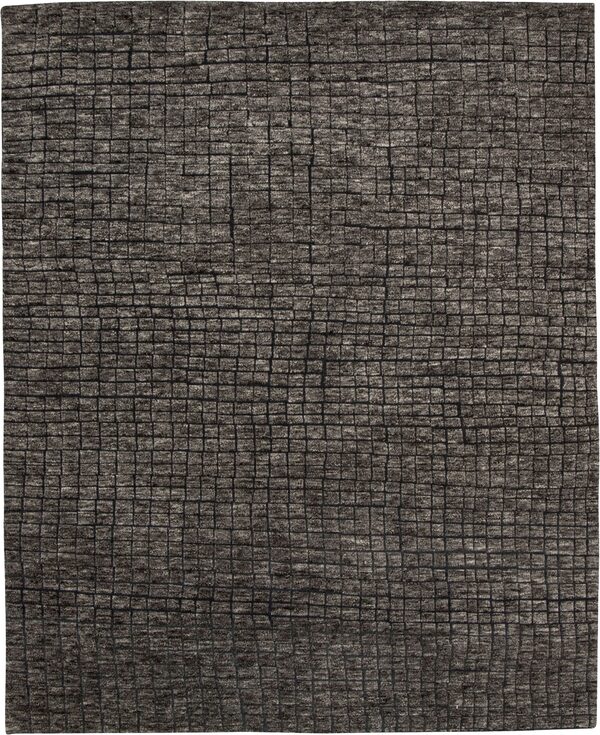
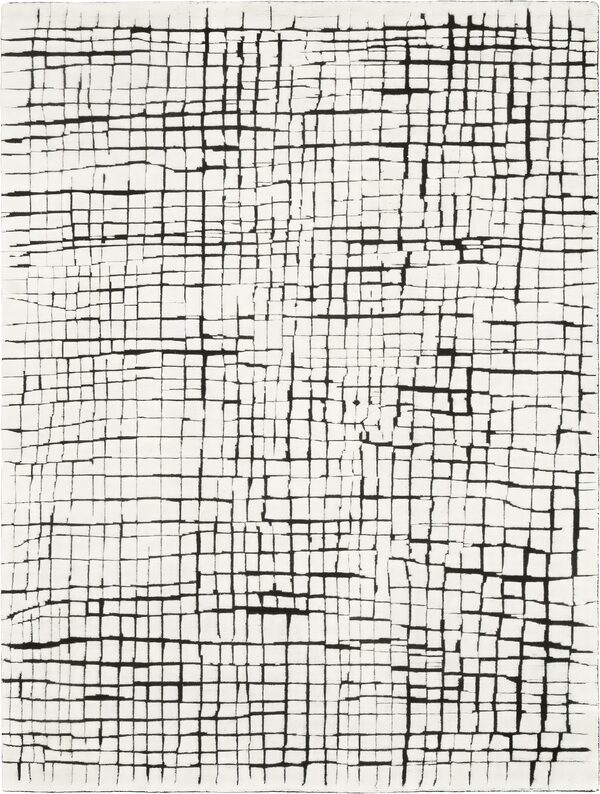
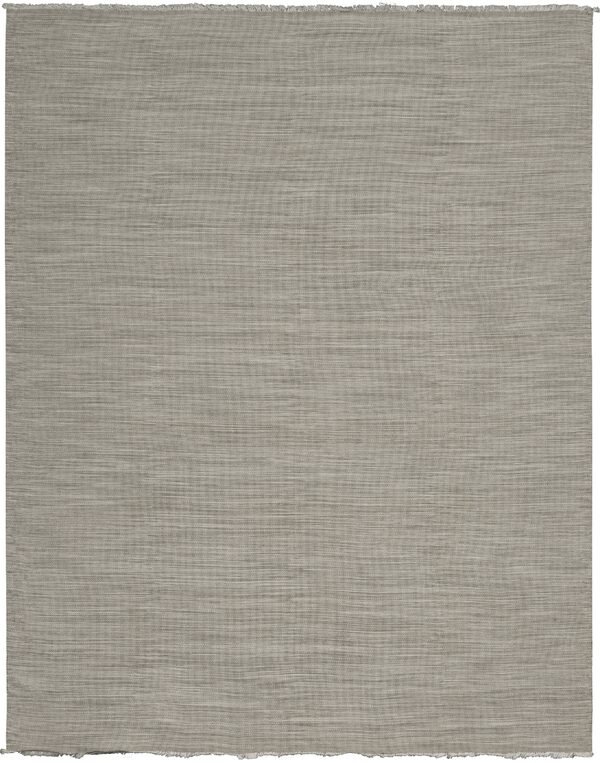
WOVEN's Solids and Textures collection offers a useful visual reference for how restrained color can shift attention toward yarn, pile, relief, and finish. The collection link is for design study; custom availability, materials, dimensions, and pricing require confirmation for the individual project.
How construction, density, and texture affect price
Construction affects price because it determines how the rug is physically made and what kinds of labor, material, finishing, and time the surface demands. Hand-knotted pile, hand-tufted pile, handloom work, and flatwoven structures should not be treated as interchangeable routes to the same object. Each has its own design possibilities, evidence requirements, and production logic.
Density or knot count can matter within a defined construction, especially when a design requires small curves or fine transitions, but a higher number is not a universal quality grade. Yarn scale, pile height, fiber, drawing, structure, finishing, and intended use all affect the result. Paying for finer resolution is useful when the design can actually use it; it is not automatically useful for every broad, quiet, or textural composition.
Texture may add work even when the palette is restrained. Multiple pile heights, carving, beveling, cut-and-loop effects, irregular shearing, or a complex transition between materials can demand more production control and hand finishing. Before simplifying a quote, identify whether the texture is the design or merely an embellishment. WOVEN's Modern Flatweaves show how a lower-profile construction can create graphic or textural character through interlacement rather than pile relief, although individual custom capability must still be verified.
Does design complexity make a custom rug more expensive?
Design complexity can affect price, but the relevant complexity is production complexity rather than visual busyness alone. A quiet design may require precise tonal steps, exact alignments, blended yarns, or subtle changes in pile. A lively drawing may translate efficiently if its scale, repeat, and construction are well resolved.
Useful questions include:
- How many distinct colors or yarn combinations require development and control?
- Does the drawing contain detail finer than the proposed construction can hold?
- Must artwork be rebuilt, simplified, repeated, mirrored, or fitted to a new proportion?
- Do lines, borders, or motifs need to align with furniture, walls, stairs, or architectural axes?
- Are multiple materials, pile heights, carving, or special finishes mapped across the surface?
- Is the design an adaptation of an established rug or a new composition requiring broader development?
Color count should not be used as a universal pricing shortcut. One additional color may be simple in one project and consequential in another because dyeing, minimum quantities, yarn blending, placement, or sampling can change. The quote should explain the applicable rule rather than leaving the design team to infer it.
Why samples, revisions, and approvals belong in the budget
Samples and revisions are part of the custom-rug budget because they turn a drawing into physical evidence. A rendering can communicate composition and color placement, but it cannot fully demonstrate pile, reflectivity, hand, relief, edge behavior, or how colors interact in the chosen construction. A physical sample reduces uncertainty; it does not reproduce every condition of the full-size rug.
Before approving a proposal, confirm what type and number of samples are included, their approximate size and construction, whether they are returnable, and what triggers an additional charge. Also define how many artwork or color revisions are included, who approves them, whether production materials may vary from the sample, and what happens when an approved specification changes.
Revision cost is easiest to control before production release. A late change can affect more than a drawing: it may alter yarn quantities, dyeing, templates, scheduling, completed work, packing, or delivery. The project team should document the price and schedule consequence of a change before authorizing it.
What should a complete custom rug quote include?
A complete custom rug quote should make the priced object, development work, commercial terms, and delivery boundary legible. It does not need to reveal a maker's internal costing, but it should let the design team understand what is being purchased and compare proposals without filling gaps by assumption.
| Quote field | What to confirm |
|---|---|
| Drawing and dimensions | Revision date, finished size, shape, orientation, and treatment of fringe or edges |
| Material schedule | Fiber and yarn descriptions, percentages or mapped placement where relevant, and approved substitutions |
| Construction | Named technique, density or quality specification where relevant, pile heights, relief, carving, and finish |
| Design development | Artwork adaptation, renderings, color work, and included revision rounds |
| Sampling | Sample type, size, quantity, cost, return terms, remake terms, and approval effect |
| Production scope | Quantity, acceptable variation or tolerance, quality control, and what constitutes production release |
| Commercial terms | Currency, quote validity, deposit and payment schedule, change-order rules, cancellation, and returns |
| Timing | Stated start condition, estimated production window, dependencies, and what is excluded from the schedule |
| Logistics | Packing, freight, insurance, duties or taxes where applicable, receiving, storage, local delivery, and access |
| Site completion | Underlay, floor preparation, installation, seaming or attachment where relevant, final inspection, and care handoff |
The comparison should also note who owns each decision. "By client," "by designer," "by maker," and "by installer" are materially different responsibilities. A lower proposal can become the higher project cost when unassigned work appears later.
How designers can control cost without flattening the design
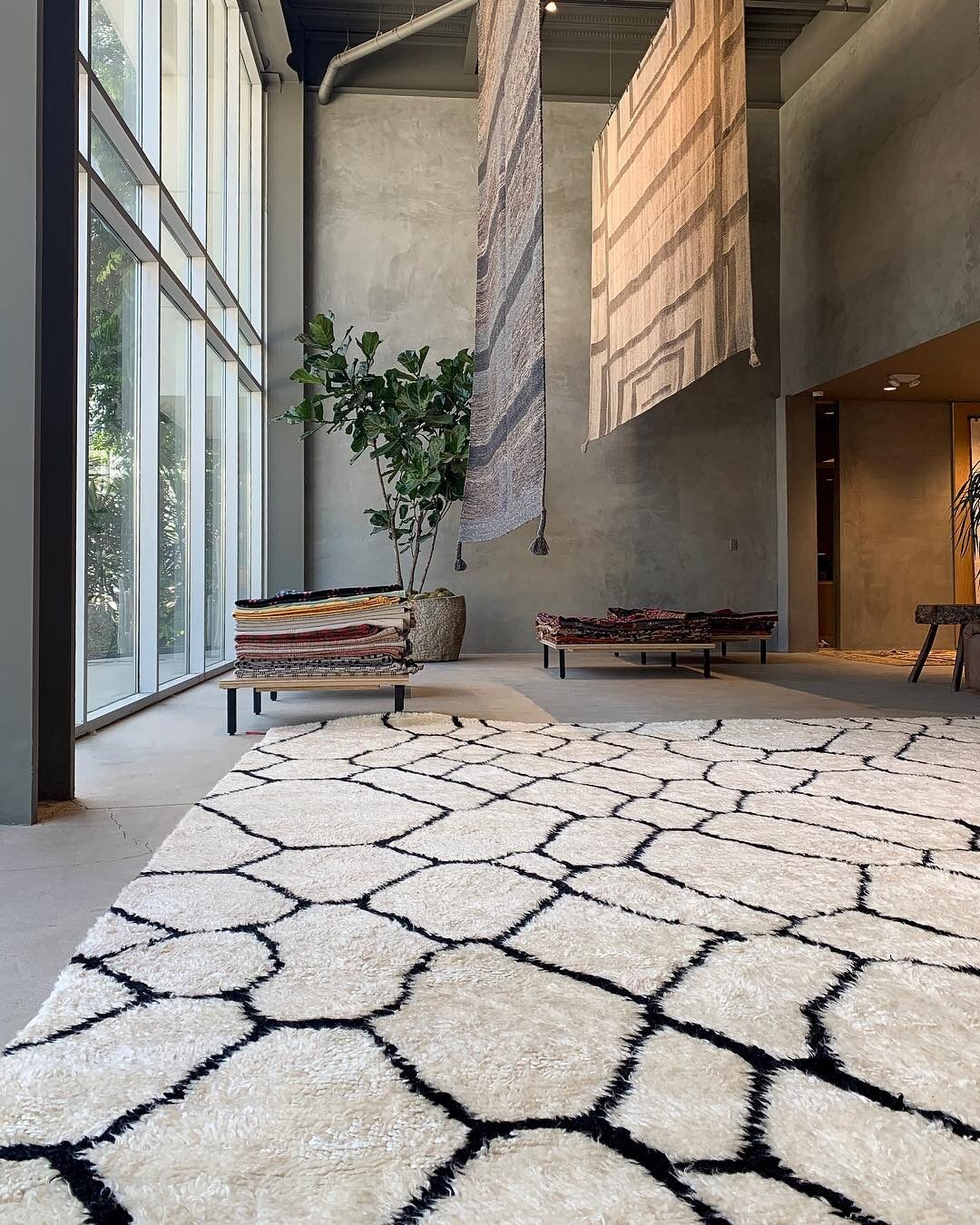
Designers can control custom-rug cost most effectively by ranking decisions before asking for reductions. Across STUDIO WOVEN, material, texture, color, and composition work together; the same principle applies to a project budget. The strongest edit preserves the features that create the rug's identity and tests flexibility elsewhere.
We recommend a three-tier value edit:
- Must hold: the decisions that make the rug work in the room, such as finished footprint, a critical architectural alignment, the dominant color relationship, or the principal surface effect.
- High-value: details that materially improve the design but can be studied through alternatives, such as where a reflective yarn appears, how much relief is necessary, or how finely a motif must resolve.
- Flexible: variables that can change with limited loss, such as hidden detail, redundant color steps, an unnecessarily complex edge, or service scope the project team can responsibly provide elsewhere.
This hierarchy is more useful than applying the same percentage reduction to every variable. Reducing size may harm furniture relationships. Removing the material that carries the focal line may save less visual value than simplifying an unseen detail. Changing construction may alter the rug's entire surface, profile, and drawing rather than acting as a neutral price substitution.
When possible, request paired options that change one meaningful variable at a time. For example, compare two material allocations within the same construction or two resolutions of the same drawing. If size, fiber, construction, design, and service scope all change together, the team learns very little from the price difference.
A seven-step custom rug budgeting framework
A reliable custom rug budget develops from a controlled brief, not from a target number alone. The following sequence helps designers obtain useful proposals while keeping scope and visual intent aligned.
- Define the budget boundary. Decide whether the working number covers the rug alone or the complete path through installation, and label it accordingly.
- Freeze the planning geometry. Record finished dimensions, shape, orientation, furniture relationships, thresholds, clearances, and any architectural alignments that cannot move.
- Describe the intended surface. Identify material roles, construction direction, pile or profile, texture, relief, edges, and the design details that carry the concept.
- Rank must-hold, high-value, and flexible decisions. Give the maker a basis for proposing intelligent alternatives instead of guessing what can change.
- Request an itemized scope. Ask what the proposal includes, excludes, assumes, and holds subject to later approval.
- Normalize the comparisons. Place proposals against the same size, material, construction, sample, revision, freight, and installation fields before comparing totals.
- Track changes against one approved baseline. Record each revision's cost, schedule, and visual consequence so the latest total remains credible.
The working budget may also need a project contingency, but there is no universal percentage appropriate to every custom rug. The design and procurement team should set it according to unresolved scope, currency or freight exposure, site complexity, approval status, and the project's own financial controls.
Common custom rug pricing misconceptions
Custom rug pricing becomes clearer when several familiar shortcuts are removed.
- "The area tells me the price." Area is meaningful only when the material, construction, development, finish, and delivery scope are also defined.
- "More knots always mean a better rug." Finer density can support finer drawing, but quality depends on the complete relationship among design, material, structure, execution, finish, and use.
- "Silk automatically makes the specification better." A reflective fiber changes light, hand, care, and cost; appropriateness depends on where and why it is used.
- "A simple-looking rug is simple to make." Quiet surfaces can depend on precise color, subtle yarn blending, relief, or demanding finishing.
- "A custom quote includes the finished project." The quote includes only what it states. Freight, receiving, underlay, installation, taxes, and other services may sit elsewhere.
- "Custom means any idea is feasible." Materials, construction, detail, shape, size, and site conditions impose real limits that should be resolved before approval.
The best custom rug budget protects intent and clarifies responsibility
The price of a custom rug is the consequence of a complete specification and a defined service boundary. Designers make better budget decisions when they separate surface, making, development, and delivery; compare proposals on equivalent terms; and preserve the few material and visual choices that give the rug its authority in the room.
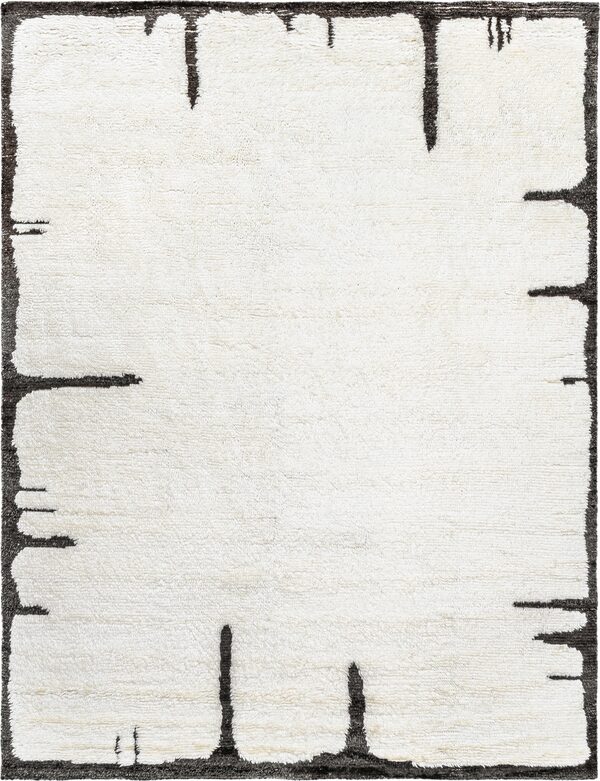
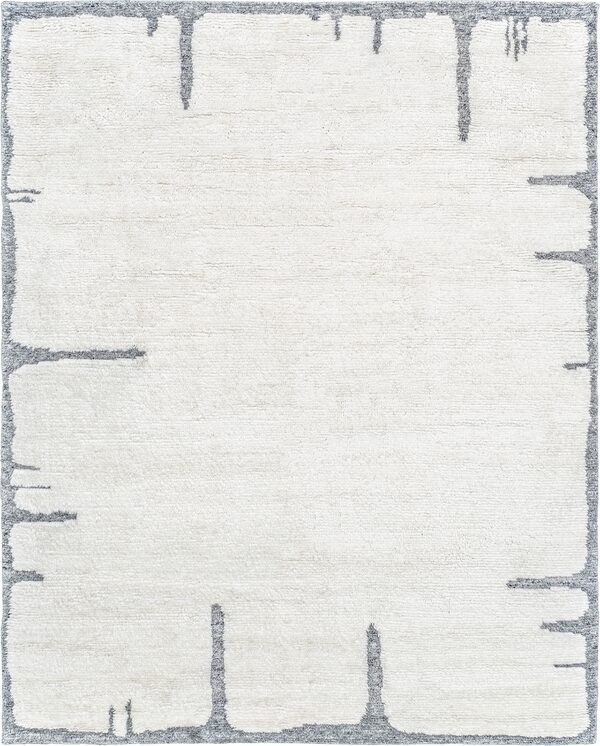
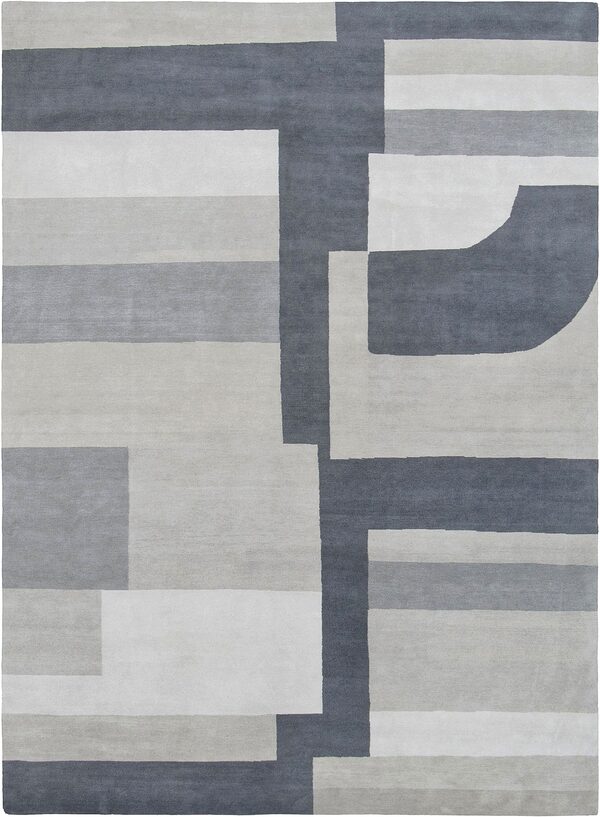
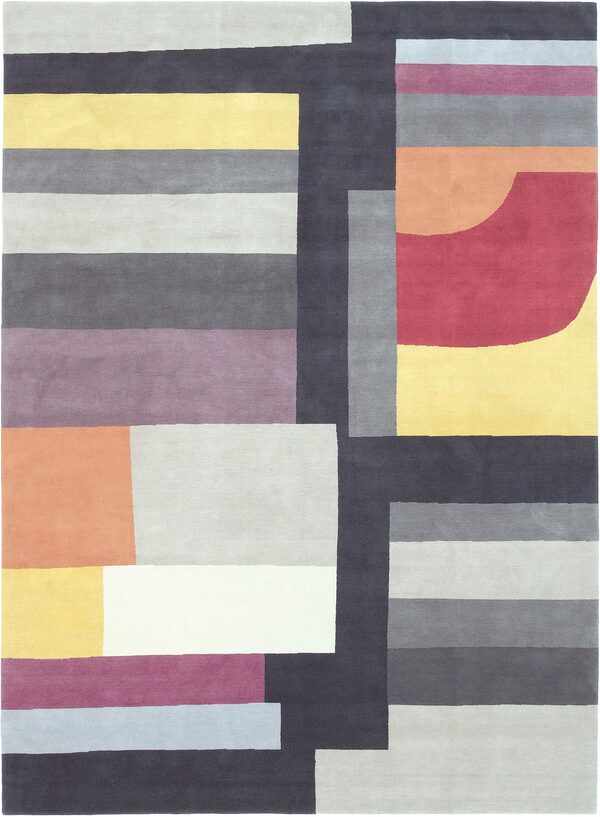
WOVEN's contemporary rug collection can help establish a visual starting point for material, pattern, color, and construction conversations. Before treating any design as a custom candidate, confirm current eligibility, technical limits, pricing, approvals, timing, and delivery scope for that specific project.