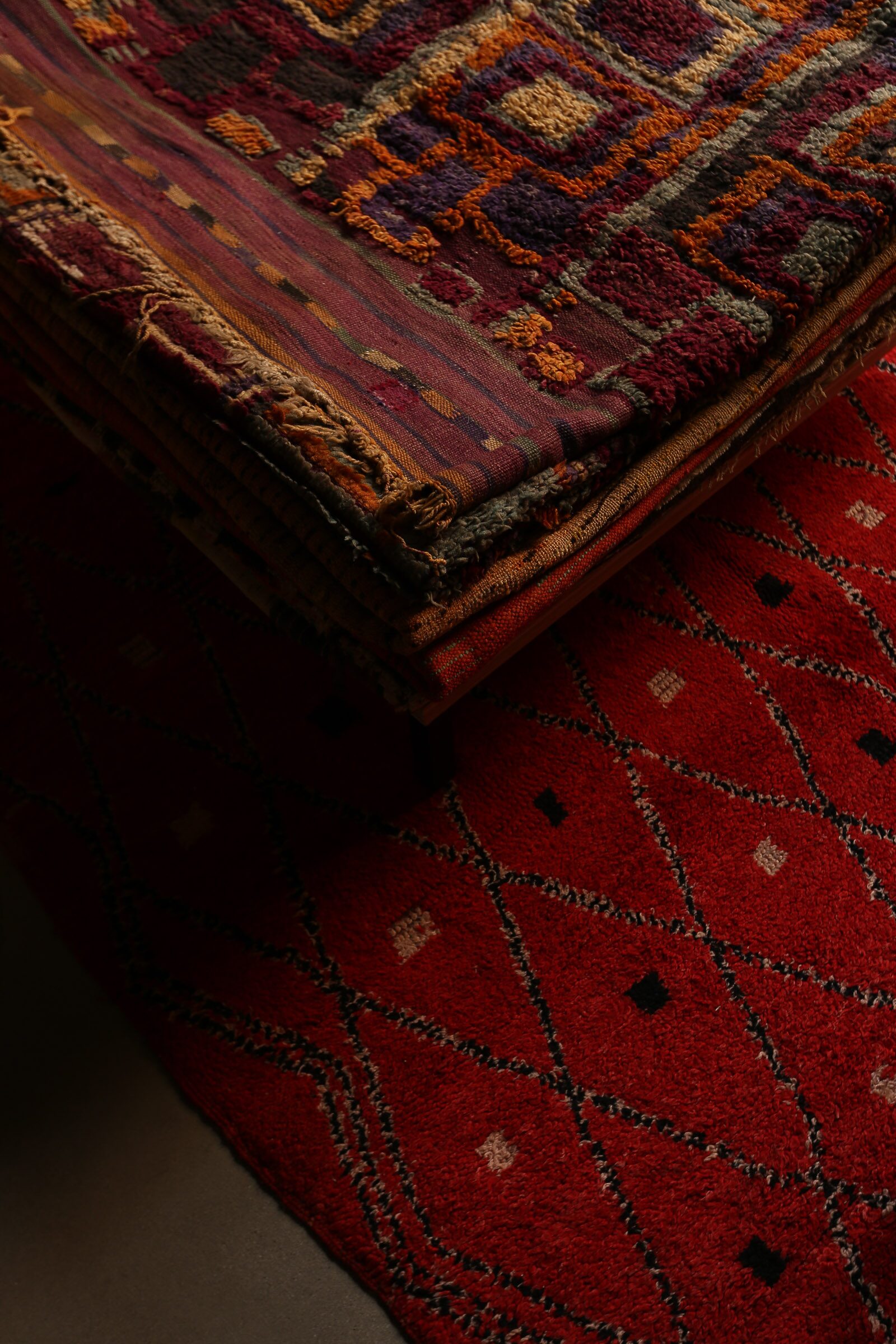
knowledge library / Antique vs. Vintage Rugs: Age, Condition, Character, and Best Uses
An antique rug is generally about 100 years old or older. A vintage rug is an older piece from a later period, but “vintage” has no single agreed age threshold in the rug trade. Ask for an estimated production date rather than relying on either label. Age helps describe the object; condition, construction, scale, and character determine whether it belongs in the room.
For a room, the better question is not simply which label sounds more valuable. It is which piece brings the right scale, condition, palette, construction, and character to the interior. An antique rug may give a room gravity and historical depth. A vintage rug may bring ease, texture, and a more relaxed collected quality. Both can be beautiful; both need to be evaluated as individual objects.
Antique and Vintage Rugs at a Glance
| Comparison point | Antique rugs | Vintage rugs |
|---|---|---|
| Typical age | Generally about 100 years old or older; ask how the date was attributed. | Older rugs below the conventional antique threshold; usage varies, so verify the estimated date. |
| Primary appeal | Historical presence, one-of-one character, older materials and weaving traditions, softened palettes. | Collected ease, more relaxed patina, flexible styling, and often a less formal feeling. |
| Condition lens | Age can mean wear, repairs, fading, lower pile, edge issues, or historical irregularity that needs careful review. | May show fading, distressing, restoration, over-dyeing, or wear depending on the piece and category. |
| Design effect | Often brings gravity, depth, and a sense of inheritance into a room. | Often brings softness, casual character, and a lived-in layer to contemporary interiors. |
| Best fit | Rooms that can support age, artistry, and visible individuality. | Rooms that benefit from patina, color movement, and a more relaxed collected quality. |
| What to verify | Age, origin, condition, repairs, stability, and whether the piece suits its intended use. | Construction, condition, color treatment, wear, and whether the surface matches the client's expectations. |
How Old Does a Rug Need to Be to Be Antique?
A rug is conventionally described as antique when it is approximately a century old or older. That is a rolling age threshold, not a fixed production period. WOVEN's collection range of 1800 through the 1920s describes the collection; it is not a separate definition of antique. A date such as “circa 1900” should be understood as an attribution whose evidence and uncertainty can be discussed.
“Antique-style” describes a design reference, not an object's age. Wear, faded color, or a traditional pattern cannot establish a production date. For the evidence behind an age attribution, see how to evaluate an antique rug.
The appeal of an antique rug is rarely just that it is old. It may carry a particular weave, regional design vocabulary, natural color movement, softened pile, old repairs, or a scale and composition that would be difficult to reproduce with the same feeling. The piece can act almost like architecture in a room: grounding furniture, tempering new materials, and giving a space a sense of time.
Antique does not automatically mean fragile, rare, valuable, or suitable for every room. Age can bring beauty, but it also asks for attention. Condition, foundation, edges, pile, repairs, and intended use should all be reviewed before the rug is placed in a busy living room, dining room, entry, or bedroom.
What Makes a Rug Vintage?
Vintage rugs are later pieces that have enough age and surface character to feel distinct from new production. They may be chosen for faded color, relaxed pattern, low pile, distressing, graphic geometry, softer wool, or the way time has made the rug easier to place in a contemporary room.
The term vintage is used broadly in the rug world, so it should be read as a starting point rather than a guarantee. A vintage Turkish rug, vintage Oushak, vintage Moroccan rug, vintage kilim, or over-dyed distressed piece can each behave differently in a room. Some feel quiet and tonal. Others are graphic, textural, or intentionally imperfect.
The practical advantage of vintage is often flexibility. A vintage rug can bring age without the same historical weight as an antique. It can soften a new interior, make a formal room feel less fixed, or give a neutral space color and texture without feeling newly manufactured.
Age Is Only One Part of the Difference
Age matters because it affects rarity, condition, availability, and the way a rug reads visually. But the oldest rug is not always the best rug for a room. A later vintage piece may have the exact palette, size, and relaxed character a project needs. An antique may be extraordinary but too delicate, too formal, too narrow, or too visually dominant for the space.
For most buyers, the useful comparison is this: antique rugs tend to bring more historical presence, while vintage rugs often bring patina with greater decorative ease. That is a tendency, not a rule. The final decision should be made rug by rug.
How Construction and Materials Shape the Choice
Antique and vintage rugs can be hand-knotted, flatwoven, piled, low-sheared, textural, tribal, formal, or informal. Construction changes how the rug feels underfoot, how pattern appears, how furniture sits on it, and how the piece performs in a room.
A finely woven antique Persian or antique Turkish rug may bring intricacy, depth, and a more formal sense of craft. A vintage kilim or flatweave may feel lighter, more graphic, and easier to layer. A vintage Moroccan piece may be chosen for texture and a more relaxed surface. These are not universal performance claims; material, construction, condition, and use case all matter.
Look at the back, edges, pile, field, border, and any areas of repair. Handmade variation is part of the appeal, but construction should still feel coherent and stable for the intended placement.
Palette, Wear, and Character
Antique rugs often have layered color that has shifted over time: softened reds, tobacco, camel, indigo, ivory, celadon, old rose, apricot, or oxidized brown. Vintage rugs may offer faded palettes, washed color, over-dyed effects, or graphic contrast that feels easier to use in contemporary interiors.
Wear is not automatically a flaw. A softened field can make a formal antique rug more livable. A faded vintage rug can quiet a room without disappearing. Abrash, irregularity, and variation can keep a rug from feeling static. The important distinction is whether the wear contributes to the design or signals a condition concern that needs specialist review.
What Condition Means for a Handmade Rug
Condition is one of the most important differences to understand before choosing antique or vintage. In handmade rugs, condition does not mean perfection. It means the relationship between age, use, repair, structure, surface, and suitability for the room.
A rug may have old repairs, low areas, reduced fringe, color variation, or uneven wear and still be a beautiful design choice. Another rug may look charming in a photograph but have weakened edges, unstable repairs, staining, odor, active deterioration, or foundation issues that make it a poor fit for the intended use.
This is where buyer expectations matter. Some clients want visible age and patina. Others want a surface that feels cleaner, more even, or easier to live with. A responsible seller or rug specialist should help distinguish character from risk, especially when condition affects value, care, or placement.
Best Rooms and Design Situations for Antique Rugs
Antique rugs are especially strong when a room needs depth, restraint, and a sense of permanence. They can work beautifully in living rooms, libraries, formal sitting rooms, bedrooms, galleries, and layered interiors where the rug is allowed to hold visual authority.
They are often useful in new architecture because they bring a counterweight to fresh plaster, stone, glass, polished wood, and contemporary furniture. They can also make a room feel assembled over time rather than completed all at once.
Use extra judgment in dining rooms, entries, high-traffic passages, and homes where spills, pets, or heavy daily use are central concerns. The right antique rug can still work in active spaces, but the individual rug's condition, construction, pile, and care plan should guide the decision.
Best Rooms and Design Situations for Vintage Rugs
Vintage rugs often shine where a room needs texture, warmth, and ease. They can suit bedrooms, family rooms, casual living spaces, offices, layered seating areas, hallways, and interiors that need age without feeling overly formal.
A vintage rug can be a strong bridge between old and new: relaxed enough for contemporary furniture, but with enough patina to keep the room from feeling showroom-fresh. Depending on the piece, vintage can also be useful when a project wants color or pattern with a softer edge.
As with antique rugs, condition and construction matter. A low, worn vintage rug may be easier to place under furniture than a thicker pile, while a delicate or heavily distressed piece may need a quieter room. The label does not replace inspection.
How to Shop Responsibly When Every Piece Is One of a Kind
One-of-one rugs require a different kind of shopping discipline. Start with measurements, room use, palette, and condition tolerance before falling in love with the story of a piece. Ask for full-rug photos, close-ups, edge and corner details, information about repairs, and, when needed, a view of the back.
Ask what is known and what is inferred. Origin, age, provenance, and rarity should be presented with appropriate care. If appraisal, insurance value, or historical significance matters, seek specialist review rather than relying on a short product description.
Finally, let the room have a vote. An antique or vintage rug should not be chosen only because it is collectible, old, or unusual. It should make the room better: better scaled, better grounded, more nuanced, more comfortable, or more alive.
When to Choose Antique, Vintage, or a New Interpretation
Choose antique when the project needs historical depth, one-of-one presence, and the gravity of an older handmade object. Choose vintage when the room needs patina, softness, and design character with a more relaxed feeling. Consider antique-inspired new production or Studio WOVEN when the project needs exact sizing, repeatability, a specific palette, or a cleaner performance expectation than a found piece can provide.
The strongest interiors often leave room for judgment rather than rules. A vintage rug can feel more soulful than an antique that is wrong for the room. An antique can transform a minimal interior when its scale and condition are right. The best choice is the piece whose age, character, and practical reality all belong in the same space.
FAQ
Are antique rugs always better than vintage rugs?
No. Antique rugs and vintage rugs serve different design needs. Antique rugs often bring deeper historical presence, while vintage rugs may offer a more relaxed and flexible character. The better choice depends on the room and the individual rug.
Does antique mean the rug is in perfect condition?
No. Antique rugs often show signs of age, use, fading, repair, and variation. Those qualities can be part of the appeal, but condition should be reviewed carefully before purchase or placement.
Are vintage rugs easier to use in modern interiors?
Often, but not always. Many vintage rugs have softened color, lower contrast, or relaxed character that works well with contemporary rooms. Still, size, palette, construction, and condition matter more than the label.
Should I choose a custom rug instead?
Choose custom when the room needs exact dimensions, a precise palette, repeatability, or a specific construction. Choose antique or vintage when the project benefits from one-of-one character, age, and the creative tension of a found piece.