Antique Rug Restoration: What Repairs Preserve a Rug, and What Can Hurt Its Value?

knowledge library / Antique Rug Restoration: What Repairs Preserve a Rug, and What Can Hurt Its Value?

Education 28 August 2026

Antique rug restoration preserves a rug when it stabilizes original structure, arrests active damage, and improves legibility without erasing evidence or adding more intervention than the object can support. It can hurt value when repairs distort the weave, remove original material, disguise extensive loss, invent missing design, introduce damaging materials, or remain undocumented. Treatment should follow examination, a written goal, and specialist review.

Restoration and value are object-specific. Work that makes one rug safer to display may be unnecessary for another, while a repair suited to continued floor use may differ from a museum-style conservation treatment. Before treating a significant rug, establish what kind of value is being considered, how the rug will be used, and which physical or historical qualities must remain intact.

What is antique rug restoration?

Antique rug restoration is deliberate work intended to stabilize damage, compensate for loss, improve appearance, or return part of a rug toward a known or supportable earlier state. The term covers a wide range, from securing a loose edge to reconstructing missing foundation, pile, and design.

Several related terms are often used interchangeably even though their goals differ. Repair describes work that restores function or structural continuity. Stabilization limits further movement or loss. Conservation prioritizes preservation and future study. Restoration may include visual reintegration. Reconstruction replaces a larger missing element based on evidence or informed interpretation.

At WOVEN, we begin by separating the physical problem from the desired appearance. A curling end, open tear, detached selvage, worn field, old patch, and faded area do not call for the same response. WOVEN's antique rug collection spans many structures and traditions, making object-specific examination more useful than a universal restoration formula.

How should you define the goal before restoring a rug?

Define the restoration goal by deciding whether the rug needs stabilization, safer handling, continued floor use, display support, visual reintegration, or preparation for sale, insurance, or collection care. Each goal permits a different level of intervention and creates different tradeoffs.

A treatment should answer a specific condition problem. “Make it look new” is not a sufficient conservation goal because newness may erase the surface, proportions, materials, repairs, and signs of use that help explain the rug. “Secure the upper end so the loss does not advance” identifies both the problem and the intended result.

Use also matters. A fragile carpet suitable for low-light display may not become appropriate for a busy floor after restoration. Conversely, a sound decorative rug with localized edge damage may need a limited functional repair rather than extensive aesthetic reconstruction. Treatment cannot make every object suitable for every setting.

Which antique rug treatments preserve structure, and which require more caution?

Antique rug treatments range from limited stabilization to substantial reconstruction. No method is inherently correct in every case; the preservation benefit depends on the rug's structure, condition, significance, intended use, materials, workmanship, and documentation.

Common antique rug interventions and their main considerations
Intervention Potential benefit and principal caution
End and edge stabilization Potential benefit: Limits unraveling, protects foundation yarns, and reduces advancing loss.
Caution: Tight overcasting, strong thread, or altered tension can pucker the rug, cut old yarns, or change its width.
Support fabric and couching Potential benefit: Distributes stress and holds weak or missing areas without reconstructing every detail.
Caution: Incompatible support, dense stitching, or complete backing can distort the object and obstruct reverse examination.
Selective reweaving or re-knotting Potential benefit: Restores local structural continuity and can improve visual legibility where design evidence is strong.
Caution: New foundation, pile, color, and density must work with the original; extensive invisible reconstruction can disguise the scale of loss.
Inserted patch Potential benefit: Fills a loss and may support continued use when responsibly fitted and disclosed.
Caution: Donor fragments, mismatched tension, adhesives, or trimmed original edges can confuse attribution and damage surrounding material.
Adhesive consolidation or backing Potential benefit: Certain specialist systems may stabilize material that cannot be secured effectively by stitching.
Caution: Adhesives can penetrate fibers, stiffen the structure, attract soil, age unpredictably, impede future treatment, or prove difficult to remove.
Color and surface compensation Potential benefit: Carefully bounded visual compensation may reduce distracting losses without rebuilding structure.
Caution: Paint, ink, over-dyeing, aggressive shearing, or broad recoloring can obscure original color, alter fibers, and misrepresent condition.
Resizing or border reduction Potential benefit: In rare cases, a previously fragmented object may be made physically coherent for a defined purpose.
Caution: Cutting removes original material, changes proportion and design, and is a major alteration rather than routine restoration.

Different weaving traditions also require different structural knowledge. A pile carpet, slit-tapestry kilim, soumak, needlework carpet, and compound textile do not accept the same repair simply because each lies on the floor. WOVEN's antique Persian rugs and antique Turkish rugs include varied foundations, knots, flatweaves, end finishes, and repair histories that must be read individually.

What qualities make a rug repair preservation-minded?

A preservation-minded rug repair is necessary, compatible, restrained, legible under examination, and fully documented. It solves the defined problem while leaving original material, evidence, and future treatment options as intact as possible.

Necessity means the intervention responds to active damage, structural risk, handling, display, or a clearly stated visual goal. Compatibility means new fibers, fabrics, stitches, dyes, adhesives, density, and tension do not overpower or endanger the original. Restraint limits treatment to what the rug can support.

Legibility does not require an ugly repair. A skilled intervention can be visually quiet from normal viewing distance while remaining distinguishable through the reverse, close examination, documentation, or analytical methods. The goal is to avoid falsifying how much original material survives.

Future options matter because every treatment becomes part of the rug's physical history. Even work described as reversible may leave traces or place stress on old fibers. A better question is whether the intervention permits reasonable future examination, retreatment, and reinterpretation.

Which repairs can hurt an antique rug's integrity or value?

Repairs can hurt an antique rug when they remove evidence, create new structural stress, misrepresent the amount of original material, or make future care more difficult. Market value may also be affected when the scope or quality of restoration changes how buyers understand the object.

  • Overly tight stitching: Distorts alignment, pulls adjacent yarns, and can cause new breaks.
  • Thread or support stronger than the rug: Transfers strain into weakened original fibers instead of sharing it safely.
  • Heavy or concealed adhesive: May stiffen fibers, discolor, trap soil, block examination, or complicate later treatment.
  • Unmarked donor patches: Can introduce unrelated old material that appears original and confuses attribution.
  • Invented pattern: Reconstructs a missing motif without adequate evidence and changes the object's visual record.
  • Broad repainting or recoloring: Obscures pile, dyes, wear, and the actual extent of loss.
  • Cutting and reshaping: Removes borders, ends, inscriptions, or structural evidence and permanently changes proportions.
  • Applied fringe presented as original: Confuses a decorative addition with the rug's structural warp ends.
  • Undocumented treatment: Leaves future owners, appraisers, conservators, and researchers unable to identify what changed.

Old restoration is not automatically harmful. A historic repair may be stable, skillful, culturally meaningful, or part of the rug's ownership history. Removing it can cause more damage than retaining it. The decision should follow examination of its materials, tension, attachment, effect on the rug, and documentary value.

Does restoration always reduce an antique rug's value?

Restoration does not always reduce an antique rug's value. Necessary, skillful, and disclosed work may preserve structural integrity, improve legibility, and make responsible use or display possible. Poor, excessive, misleading, or unstable work can diminish both physical integrity and market confidence.

The effect depends on what value means in context. Retail asking price, auction estimate, fair market value, insurance replacement value, scholarly significance, and personal value are not interchangeable. A treatment that improves decorative usability may be viewed differently in a rare collector's carpet where originality and evidence carry unusual weight.

Scale matters as well. Securing a short open end differs from reconstructing half a field; replacing a small missing selvage differs from reducing the perimeter. Quality, visibility, rarity, attribution, age, documentation, and current demand all affect how the market interprets the work.

When stakes are meaningful, obtain a condition assessment, independent appraisal, or both before treatment. The restorer or conservator can explain physical options and risks, while a qualified appraiser can address the relevant value context. One role should not be assumed to replace the other.

Should missing pile or design always be reconstructed?

Missing pile or design should not always be reconstructed. Re-knotting or reweaving may be justified when it restores local structural continuity, protects vulnerable foundation, or reintegrates a well-documented design, but visible loss can sometimes be stabilized without being replaced.

The decision begins with evidence. Surviving repeats, mirrored design, archival photography, comparable examples, and original foundation may support a reconstruction. Guesswork becomes riskier when the loss is large, the pattern is irregular, or the attribution is uncertain.

Visual reintegration also has degrees. A toned support beneath a loss may quiet contrast without imitating every knot. Selective low pile can establish color and rhythm while remaining distinguishable. Full reconstruction creates the strongest appearance but also adds the most new material and interpretive certainty.

At WOVEN, we ask whether replacement helps the viewer understand what survives or asks new work to impersonate the original. The answer changes with the rug's significance, intended use, and the proportion of loss.

How should fringes, ends, and selvages be restored?

Fringes, ends, and selvages should be restored according to their structural role, not treated as interchangeable decorative trim. Fringe may be the exposed continuation of the foundation warps, while end finishes and side cords can lock the weave and protect it from unraveling.

A sound treatment may secure loose wefts, protect exposed warps, rebuild a missing side finish, or add a visually compatible guard. The repair must avoid pulling the rug out of square, narrowing the field, creating a hard ridge, or piercing fragile yarns unnecessarily.

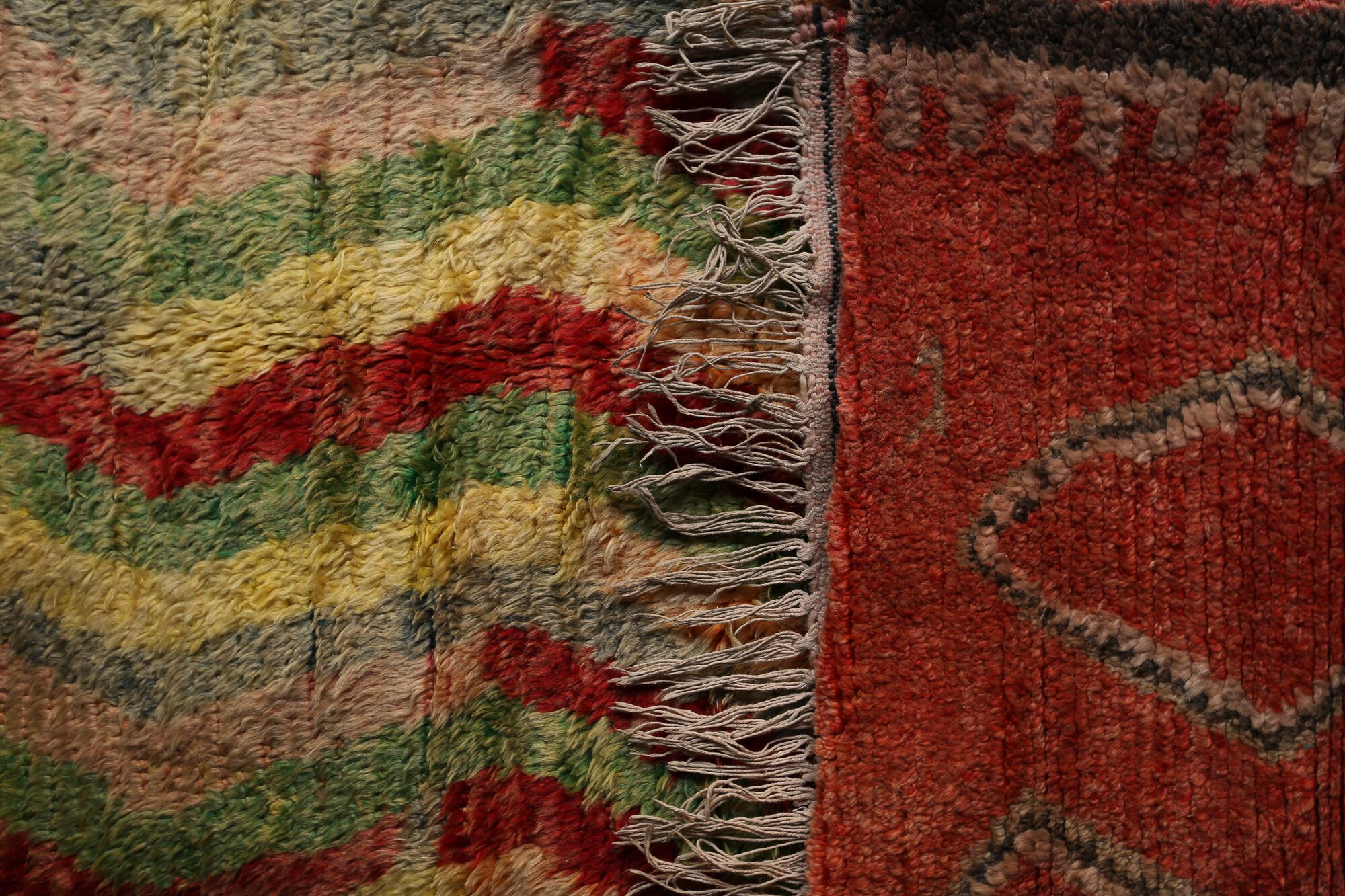
Adding a new fringe for visual completeness is different from stabilizing original warp ends. If applied fringe is used, it should be documented and should not be represented as original construction. Bleaching, combing, knotting, or aggressive whitening can weaken fibers and erase evidence of age or previous work.

What should happen before any antique rug restoration begins?

Before restoration begins, the rug should be identified, examined, photographed, and mapped; the owner should receive a written proposal that states the problem, goal, method, materials, alternatives, risks, limits, cost basis, and expected appearance.

  1. Record the rug as received. Photograph the full front and reverse, all edges and ends, details at a consistent scale, and every damaged or previously restored area.
  2. Describe the structure and materials. Note pile or flatweave construction, foundation, fibers, end and side finishes, backing, patches, and any uncertain components.
  3. Map condition. Locate loss, tears, weakness, corrosion, distortion, insect damage, stains, fading, old repairs, and areas under tension.
  4. Separate facts from attribution. Record what is physically visible and distinguish it from opinions about origin, date, rarity, and authorship.
  5. Define the treatment objective. State whether the goal is stabilization, display, floor use, visual reintegration, or another specific outcome.
  6. Compare alternatives. Include nonintervention, preventive care, support, limited repair, and more extensive restoration where relevant.
  7. Review tests and samples. Confirm how fibers, dyes, finishes, adhesives, or proposed replacement yarns will be evaluated before broad treatment.
  8. Clarify approval points. Require consent before major discoveries, scope changes, removal of old work, cutting, recoloring, or added reconstruction.
  9. Consider value before irreversible change. Seek independent appraisal or specialist opinion when treatment may materially affect attribution, originality, or market interpretation.

A remote estimate may be useful for initial planning, but photographs cannot fully reveal fiber weakness, dye behavior, stiffness, adhesive penetration, foundation breaks, tension, odor sources, or layered repairs. Important decisions may require direct examination and testing.

What documentation should accompany a restored rug?

Restoration documentation should let a future reader understand the rug's pre-treatment condition, the reason for treatment, what was added or removed, who performed the work, which materials and methods were used, and how the rug should be cared for afterward.

  • Full before-, during-, and after-treatment photographs from matching viewpoints
  • A dated condition diagram locating original material, losses, prior repairs, and new work
  • The treatment proposal, owner approvals, scope changes, and completion report
  • Materials, fibers, dyes, fabrics, adhesives, cleaning systems, and stitch or weaving methods used
  • Tests performed and relevant results, including areas where treatment was stopped or changed
  • Removed patches, yarn samples, labels, or other material retained when appropriate and safe
  • The names and roles of the examiner, conservator, restorer, appraiser, and other specialists
  • Recommendations for use, display, handling, storage, cleaning, monitoring, and future review

Documentation should travel with the rug when ownership changes. It is part of responsible disclosure and can prevent later treatment from repeating tests, misreading replacement material, or removing stable work without understanding its purpose.

What are the most common misconceptions about antique rug restoration?

The most common misconceptions treat restoration as either complete renewal or automatic damage. Responsible treatment occupies a more careful middle ground shaped by evidence, purpose, materials, and disclosure.

  • “The best restoration is invisible.” Visual discretion can be desirable, but treatment should remain detectable through examination or documentation.
  • “Every hole should be filled.” Some losses need support rather than complete reconstruction.
  • “Old repairs should always be removed.” Stable earlier work may be historically meaningful or safer to retain.
  • “Reversible means risk-free.” No intervention is entirely without effect; future retreatability and access are more useful questions.
  • “New fringe restores the rug's originality.” Applied fringe is new material and must not be confused with surviving foundation warps.
  • “Restoration guarantees higher value.” Market response depends on the rug, treatment, documentation, value context, and demand.
  • “A cleaner-looking rug is better preserved.” Cleaning and recoloring can remove or obscure material evidence and may cause irreversible change.
  • “Any skilled weaver can restore any rug.” Restoration also requires condition assessment, conservation judgment, documentation, and experience with the relevant structure.

How does WOVEN evaluate a restoration proposal?

WOVEN evaluates a restoration proposal through six questions: integrity, necessity, compatibility, legibility, disclosure, and future options. The proposal should protect what is original while being honest about what treatment can and cannot accomplish.

  1. Integrity: Which original materials, structures, proportions, surfaces, and historical traces must remain undisturbed?
  2. Necessity: What active problem or defined use requires intervention now?
  3. Compatibility: Will new materials, density, color, tension, and attachment age safely with the original?
  4. Legibility: Will the design become easier to understand without falsifying how much survives?
  5. Disclosure: Can every meaningful addition, removal, and uncertainty be documented and communicated?
  6. Future options: Will later specialists still be able to examine, interpret, maintain, and retreat the rug?

Readers comparing traditions and condition across a broad group can explore WOVEN's complete antique collection. The visual variety is also a reminder that no single repair philosophy can be applied without understanding the individual object.

When does restoration preserve an antique rug?

Restoration preserves an antique rug when it is evidence-based, proportionate, structurally compatible, and documented from examination through completion. It becomes risky when appearance overrides integrity or new work conceals the extent of loss. The strongest treatment is not necessarily the most extensive; it is the one that solves the real problem while leaving the rug truthful, stable, and open to future understanding.

we value your privacy. we use cookies to personalize your site experience and analyze site traffic.

trade portal login